Merino Wool vs Polyester: The Honest Breakdown
A 5th-generation Australian wool farmer compares the two fabrics most likely to be sitting in your closet right now.
By Jock Merriman, Founder of Sir W. Merino
Most "performance" clothing sold today is polyester. Most travel clothing is polyester. Most gym shirts, athletic wear, base layers, hiking gear, fast-fashion casual wear — polyester. It's everywhere because it's cheap to produce, easy to dye, and doesn't wrinkle.
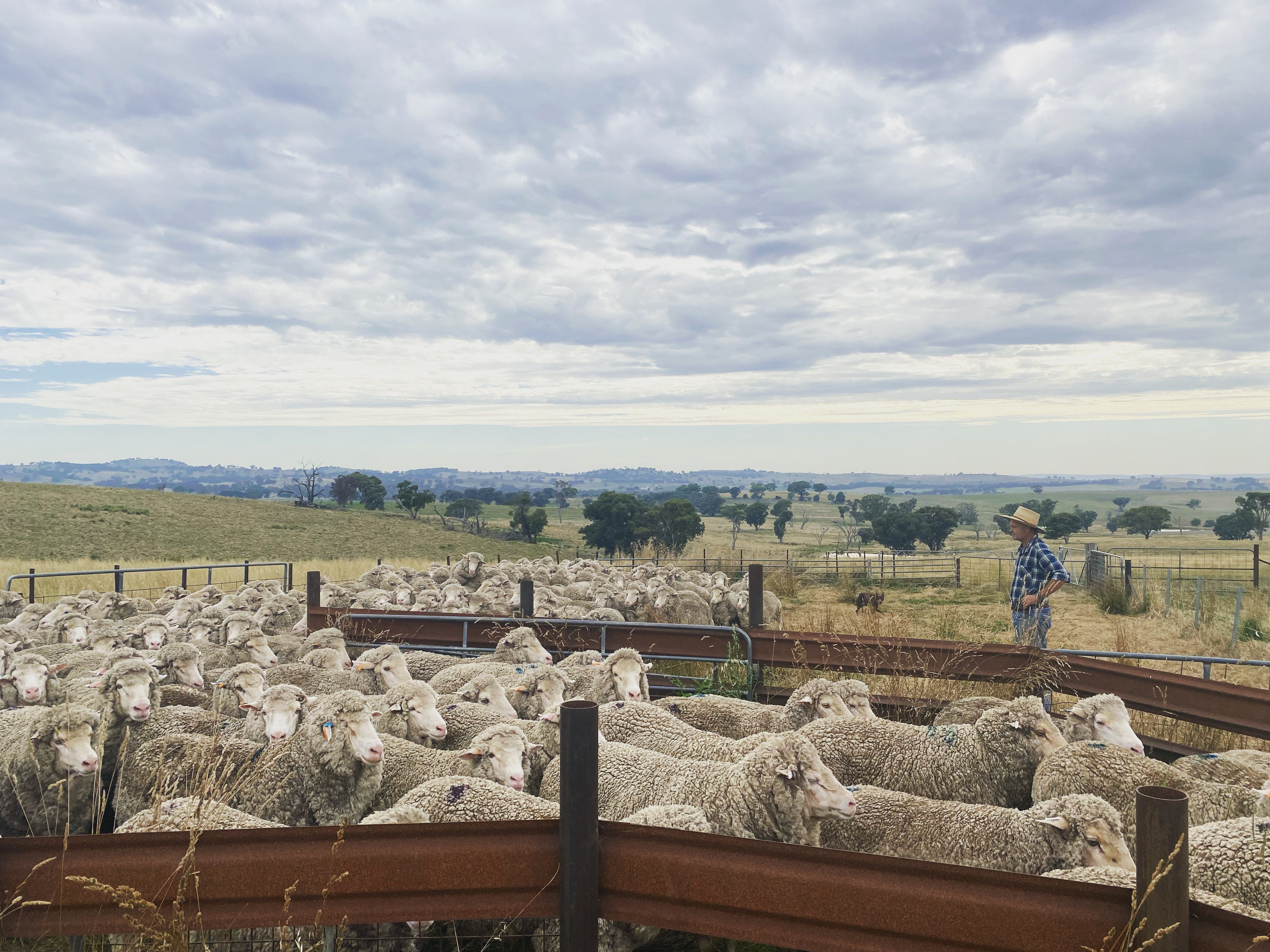
Merino wool does most of the same jobs. It's also the fabric I've spent my whole life around — my family has been growing it since 1880, and it's the world I built Sir W. Merino out of.
So I'm not neutral on this comparison. But I'll be honest about where polyester wins, where it loses, and where most buyers are paying too much for performance gear that's actively working against them.
Here's the breakdown.
The Quick Answer
If you only have thirty seconds, here it is:
Merino wool wins on: breathability, temperature regulation, odour resistance, comfort against the skin, durability, biodegradability, microplastic impact, and cost per wear.
Polyester wins on: upfront price, drying speed when soaking wet, and that's about it.
For everything else — including most of the reasons people think they need polyester — merino is the better choice. Below is why, broken down by category.
What Each Fabric Actually Is
Before the comparison, it helps to know what you're comparing.
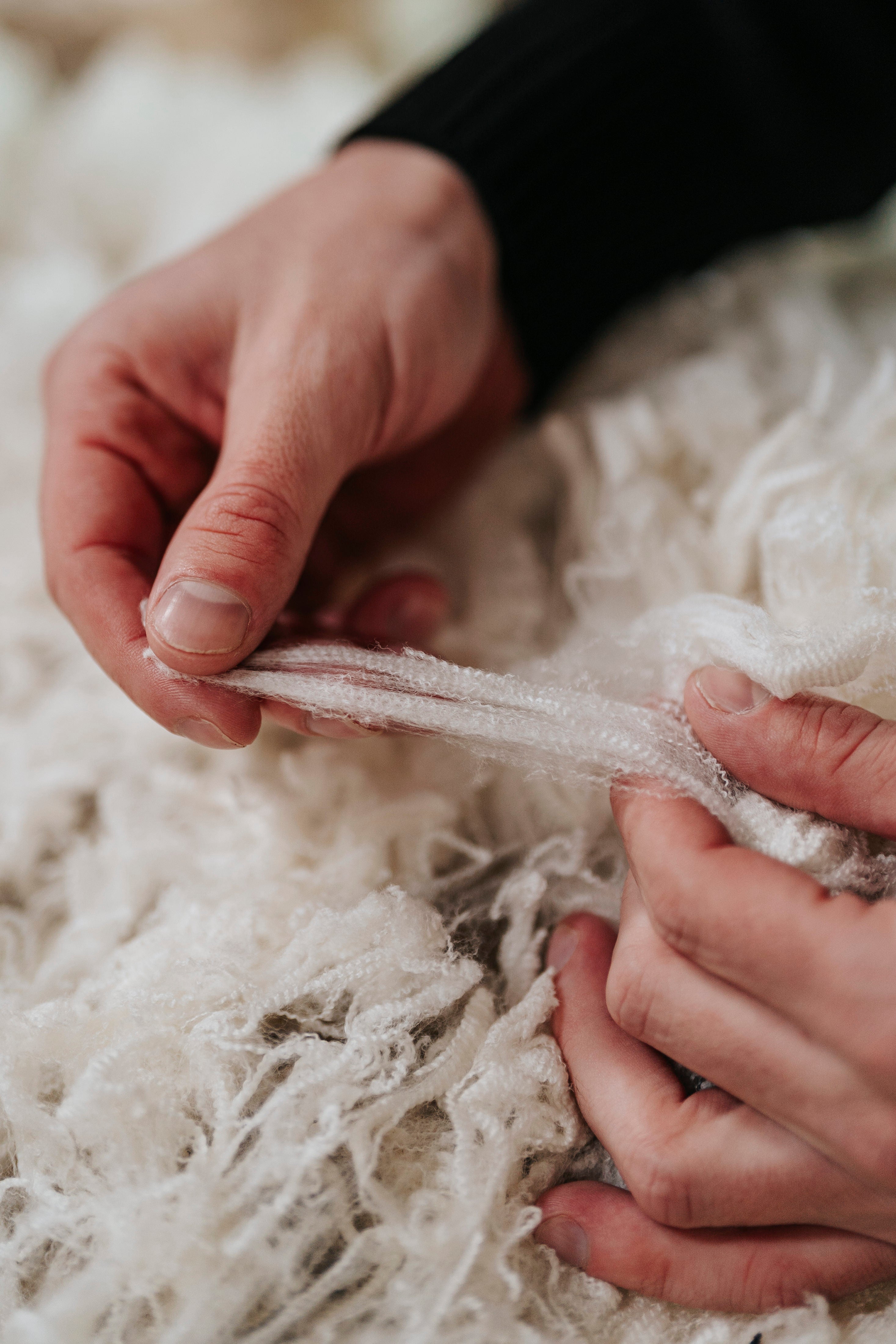
Merino wool is a natural fibre grown by Merino sheep. The breed originated in Spain and now thrives mostly in Australia, which produces around 80% of the world's apparel-grade merino. A single fleece is grown over 12 months on the back of a living animal, then shorn, classed, scoured, spun, and woven or knitted into fabric. The fibres are exceptionally fine — usually 16-19 microns thick — which is what makes the fabric soft instead of scratchy. (Full breakdown of how merino is grown →)
Polyester is a synthetic fibre derived from petroleum. It's made by reacting ethylene glycol (from crude oil) with terephthalic acid to form polyethylene terephthalate — PET — the same plastic used to make water bottles. The PET is melted, extruded into fibres, and spun into yarn. It's been mass-produced since the 1950s.
One is grown. One is manufactured from petroleum.
That distinction shapes every category below.
1. Breathability and Temperature Regulation
Winner: Merino, decisively.
Merino wool's natural crimp creates tiny air pockets that trap warmth in cold weather and wick moisture away from the body in heat. Sheep evolved to wear it through 105°F Australian summers and frosty winter mornings — the fibre does both jobs. When you wear it, it does the same for you. (More on how merino regulates temperature →)
Polyester traps heat. It doesn't breathe naturally. The "moisture-wicking" properties marketed on performance polyester are a chemical treatment, not a property of the fibre itself — and that treatment wears off over time and washes.
In real-world wear: a merino shirt feels comfortable across a 60°F temperature swing. A polyester shirt feels uncomfortable at both ends. You sweat in it when it's warm; you freeze in it when it's cold.
2. Odour Resistance
Winner: Merino, by a mile.
Merino wool is naturally antimicrobial. The structure of the fibre, combined with trace lanolin even after scouring, makes it inhospitable to the bacteria that cause body odour. You can wear a merino shirt for three or four days between washes and it still smells fresh.
Polyester is the opposite. The fibre is hydrophobic, which means sweat sits on the surface instead of being absorbed. Bacteria thrive in that warm, damp environment. After a single workout, a polyester shirt holds odour permanently — and even washing rarely removes it completely. This is why your polyester gym shirt smells faintly of sweat even after the laundry.
This is the single biggest practical difference between the two fabrics, and the one that surprises new merino owners most. You really can wear a shirt for a week of travel without washing it.
3. Comfort Against the Skin
Winner: Merino.
Modern fine merino (16-19 microns) is too soft to trigger the nerve endings that cause "itchy wool" sensation. It feels closer to cotton than to traditional wool. Many people who think they're allergic to wool have only ever worn coarse wool (30+ microns) — fine merino is a different experience entirely.
Polyester sits on the skin without absorbing moisture. The result is a clammy feel when you sweat, and static cling in dry weather. Some performance polyesters are softened with chemical treatments to feel better against the skin, but those treatments are temporary.
4. Durability and Lifespan
Winner: Merino — but not by as much as you'd think.
A well-made merino shirt lasts 4-7 years of regular wear. The fibre has natural elasticity, so it recovers shape after stretching. It also doesn't pill as quickly as cheaper fabrics. With basic care (no tumble dryer, gentle wash), it's one of the longest-lasting things in your closet.
Polyester is structurally durable — it doesn't tear easily, doesn't shrink, doesn't fade fast. But "structurally durable" isn't the same as "wearable for years." Polyester shirts lose their shape and start looking tired within 18 months of regular wear. The fabric is intact but it looks bad.
A merino shirt at year four still looks like a merino shirt at year one. A polyester shirt at year four looks like fast fashion that's been through too much.
5. Microplastics and Environmental Impact
Winner: Merino, completely.
Every time you wash a polyester garment, it sheds tens of thousands of microplastic fibres into the water system. A 2016 study at Plymouth University found that a single wash of synthetic clothing can release between 124,000 and 730,000 individual microfibres. These end up in the ocean, in marine life, and increasingly, in human bodies — microplastics have been detected in human blood, placentas, and lung tissue.
Merino wool is 100% biodegradable. A merino shirt buried in soil fully decomposes within a year. The fibre returns to the earth as nutrients. There are no microplastics shed during washing because there are no plastics in the fabric to begin with.
If sustainability matters to you at all, this category alone settles the question. Polyester is the cigarette of the fashion industry — convenient, addictive, and quietly causing damage that compounds over decades.
6. Cost Per Wear
Winner: Merino, despite higher upfront cost.
A merino shirt costs more upfront — typically $90-150 for a quality piece, versus $20-40 for a comparable polyester shirt. On the shelf, polyester looks like a deal.
The math changes when you factor in lifespan and wears per wash:
- A $125 merino shirt that lasts 5 years costs $25 per year.
- A $35 polyester shirt replaced every 18 months costs about $23 per year — and that's before you factor in the smell issues, the fading, and the fact that you need more polyester shirts in rotation because each one needs washing after every wear.
When you factor in that merino can be worn 3-5 times between washes, while polyester needs washing after every wear, the practical cost gap widens further. You need fewer merino shirts. You wash them less. You replace them less. (See the full cost-per-wear math →)
7. Where Polyester Genuinely Wins
To be fair, polyester does have real advantages in a few specific situations:
Soaking-wet conditions. Polyester dries faster than wet wool. If you're going to be fully submerged or caught in heavy rain regularly, polyester has a place — though merino still performs better than people expect when wet, because it retains warmth even when damp (wool's superpower in cold climates).
Very high-impact athletic use. Competitive athletes doing repeated high-output activity sometimes prefer polyester's mechanical durability. For most people doing most workouts, merino is more than sufficient — and our Cassius athletic tee is built specifically for this use case.
Low-budget needs. If you genuinely cannot afford $100+ for a shirt, polyester is what's available. But buying three polyester shirts at $35 each over five years costs more than one $100 merino shirt that lasts the same five years.
Specific technical garments. Rain shells, packable jackets, certain ultralight pieces — there are technical applications where polyester or other synthetics serve specific functions. But for everyday shirts, t-shirts, and base layers — the categories most people wear most of the time — merino is the better choice.
The Side-by-Side Summary
| Category | Merino Wool | Polyester |
|---|---|---|
| Breathability | Excellent | Poor |
| Temperature regulation | Both hot and cold | Neither well |
| Odour resistance | Natural, strong | Holds odour |
| Comfort | Soft, drapes well | Clammy when wet |
| Wears per wash | 3-5 | 1 |
| Lifespan | 4-7 years | 1-2 years |
| Biodegradable | Yes | No (centuries) |
| Microplastic shedding | None | 100,000+ per wash |
| Upfront cost | Higher | Lower |
| Cost per year | $20-25 | $25-50 |
Why I Built Sir W. Merino
I grew up working sheep on our family stud in Boorowa, NSW. My great-grandfather Sir Walter Merriman founded the stud in 1903, and was knighted by Queen Elizabeth II in 1954 for his contribution to the Australian Merino industry. Five generations on, my family still runs the operation, and it's the world I built Sir W. Merino out of.
(Read the full family story →)
When I moved to Austin, Texas in 2019, I noticed something. Most American men had wardrobes full of polyester — gym shirts, travel shirts, everyday tees. They'd never owned a merino shirt. Many didn't know merino was a fabric.
That was the gap. So I started Sir W. Merino — built around three shirts made from my family's wool:
- The Bruce — the merino wool button-up that drapes like a dress shirt, breathes like a t-shirt, travels like a packable jacket.
- The George — the all-day polo. Tucked at the office, untucked on the weekend. Works for both halves of your life.
- The Cassius — the merino athletic tee. Built for training and everyday wear in one shirt, with no plastic involved.
If you've spent years in polyester and never tried merino, The Starter Set is the easiest way in — all three shirts at $35 off vs buying separately.
Frequently Asked Questions
Is merino wool better than polyester for working out?
For most workouts, yes. Merino regulates temperature better, doesn't trap odour, and feels softer against the skin. Polyester's main advantage is faster drying when fully soaked, which matters in some endurance sports but not most regular training.
Why does polyester smell so bad after one wear?
Polyester is hydrophobic — it doesn't absorb sweat, so moisture sits on the surface where bacteria thrive. The bacteria produce odour compounds that bond to the synthetic fibre and become extremely difficult to remove, even with washing.
Is polyester really that bad for the environment?
Yes. It's made from petroleum, doesn't biodegrade (takes hundreds of years to break down), and sheds microplastics into the water system with every wash. A single load of synthetic laundry can release hundreds of thousands of microplastic fibres.
How is merino wool more sustainable than polyester?
Merino is a renewable natural fibre — sheep produce a new fleece every year, the land used for grazing supports biodiversity, and the wool itself fully decomposes when discarded. Compared to petroleum-based synthetics, the lifecycle environmental footprint is dramatically lower.
Can I wear merino in hot weather?
Yes. Sheep wear it through Australian summers (over 100°F) and the fibre regulates body temperature in heat by wicking moisture and releasing it through evaporation. Lighter weights (around 150 gsm) are ideal for hot climates and feel closer to a t-shirt than a sweater.
Does merino wool itch like regular wool?
No. Modern fine merino (16-19 microns) is too soft to trigger the nerve endings that cause the "itchy wool" sensation. People who find regular wool itchy have usually only worn coarse wool (30+ microns). Fine merino feels closer to cotton than to traditional wool.
Is merino more expensive than polyester?
Upfront, yes. But the cost-per-year math favours merino: a $125 merino shirt that lasts 5 years works out to $25/year, while a $35 polyester shirt replaced every 18 months costs around $23/year — without factoring in odour issues, fading, and the fact that you need more polyester shirts in rotation.
Jock Merriman is the founder of Sir W. Merino and a fifth-generation Australian wool farmer. His family has been growing Merino wool since 1880, and currently operates Merryville Stud — founded by Sir Walter Merriman in 1903 — in Boorowa, NSW. Jock lives in Austin, Texas, where Sir W. Merino is based. Read more about the family story →