Packing for the extremes is easy. The days that change their mind halfway through are the ones that catch you out.
By Jock Merriman · Founder, Sir W. Merino · 5th generation
Anyone can pack for a hot country or a cold one. It is the shoulder seasons that catch people out: a morning that wants a jacket, an afternoon that wants nothing at all, and an evening that wants the jacket back. October in Austin does this to me every year, and so does most of the northern hemisphere's autumn.
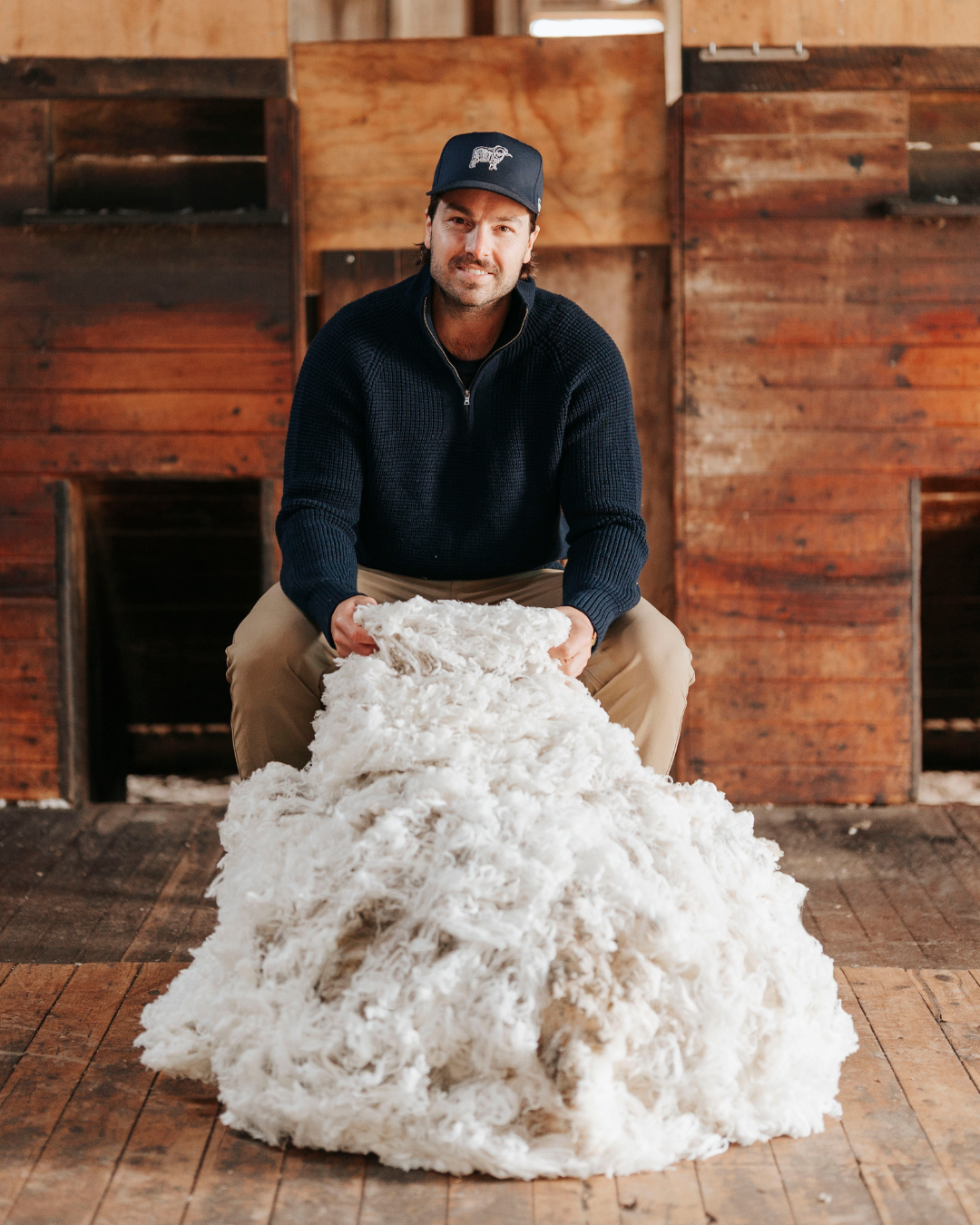
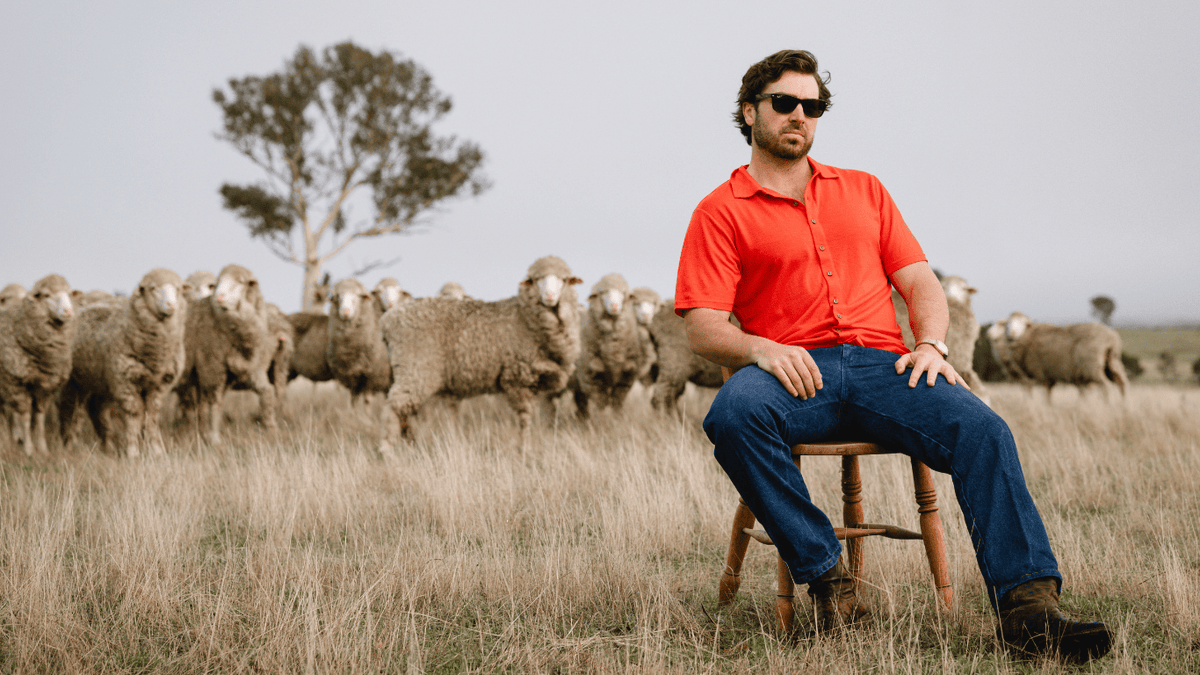
I grew up reading days like this. On the tablelands around Boorowa, where my family's Merryville stud still runs, a clear day can open with frost and finish in shirtsleeves. You learn to dress for the whole day, not the first hour of it.
Why the in-between days are harder to pack for
A hot day asks one thing of a shirt and a cold day asks another. A day that does both asks the shirt to manage moisture, because that is what goes wrong. You warm up walking from the station, you sweat a little, you step into an air-conditioned lunch, and the damp shirt turns cold against your back. The temperature was never the real problem. The moisture was.
What superfine merino does with a swing
Wool is hygroscopic: the fibre takes moisture in as vapour rather than leaving it as liquid on your skin. Merino can hold roughly 30 to 35 per cent of its dry weight in vapour before it feels wet to the touch; most synthetics begin to feel damp at under 10. That is structure, not a treatment, so it does not wash out.
As wool takes up that moisture it also releases a little heat, which is part of why a good merino shirt does not turn clammy when the air cools. It is a small effect and I will not dress it up as more than that.
The same structure helps with odour. Less moisture sitting against the skin means bacteria have less to work with. It is the fibre's structure doing that, by the way, not lanolin, which is scoured off long before the wool is spun.
What it will not do
A merino shirt is not a coat. The Bruce is a short-sleeve button-up, so on a properly cold evening it is a layer, not the whole answer. In Dublin this July, roughly fifteen degrees cooler than Tuscany had been, I wore The Bruce under a light jacket and was perfectly comfortable. The shirt did its part and the jacket did the rest.
And in heavy, humid heat, no fibre will keep you dry. Merino simply keeps you more comfortable, and less noticeable, while you are in it.
A shoulder-season carry-on
For ten days anywhere the weather cannot make up its mind, I would pack two Bruces, because a button-up carries you from a morning meeting to dinner; one Cassius for the hottest hours or a run; and one light jacket. On our fortnight through Italy and Ireland this summer, that same three-shirt kit was enough, and I did not wash any of them. Hang each shirt up overnight, wear it again, and let the fibre reset.
If you would rather start with one of each, The Starter Set holds The Bruce, The George and The Cassius for $290, which is $35 less than buying them separately.
The bottom line
Packing for the weather is a guess. Packing for the swing is a system: a fibre that handles moisture, one proper outer layer, and fewer shirts than your instinct tells you to bring.
The Bruce — $125 ·
The Cassius — $90 ·
The Starter Set — $290 ($35 off)
Free US shipping. 30-day free returns.
Questions I get asked
Is merino too warm for autumn travel?
Not in a lightweight shirt. The warmth people associate with wool comes mostly from thick knits. A lightweight shirt like The Bruce manages moisture, which is what makes a warm afternoon bearable; it does not trap heat the way a sweater does.
What do I wear over a short-sleeve merino shirt when it turns cold?
A light jacket or overshirt. The shirt manages moisture next to the skin and the outer layer provides the warmth.
How many merino shirts should I pack for ten days?
Three, in rotation, if you are happy to hang each one overnight. Our care guidance is to wash cold on a wool cycle every five to ten wears and to dry flat.
Will a merino shirt still smell after a hot day?
Far less than most, but not never. Heavy sweat in humid heat will eventually tell. Air the shirt overnight, and if it still needs a wash, give it one.
Does fine merino itch?
Coarse wool does; the itch threshold sits around 30 microns. Sir W. shirts are 17.5 to 19 microns.
— Jock Merriman, Founder · 5th generation
About the author. Jock Merriman is the founder of Sir W. Merino. His family has been in Australian Merino since 1880; his great-grandfather, Sir Walter Merriman, founded the Merryville Stud near Boorowa, NSW, which the family still runs. It is the world he built Sir W. Merino out of. Grown in Australia. Designed in Austin. Worn everywhere.