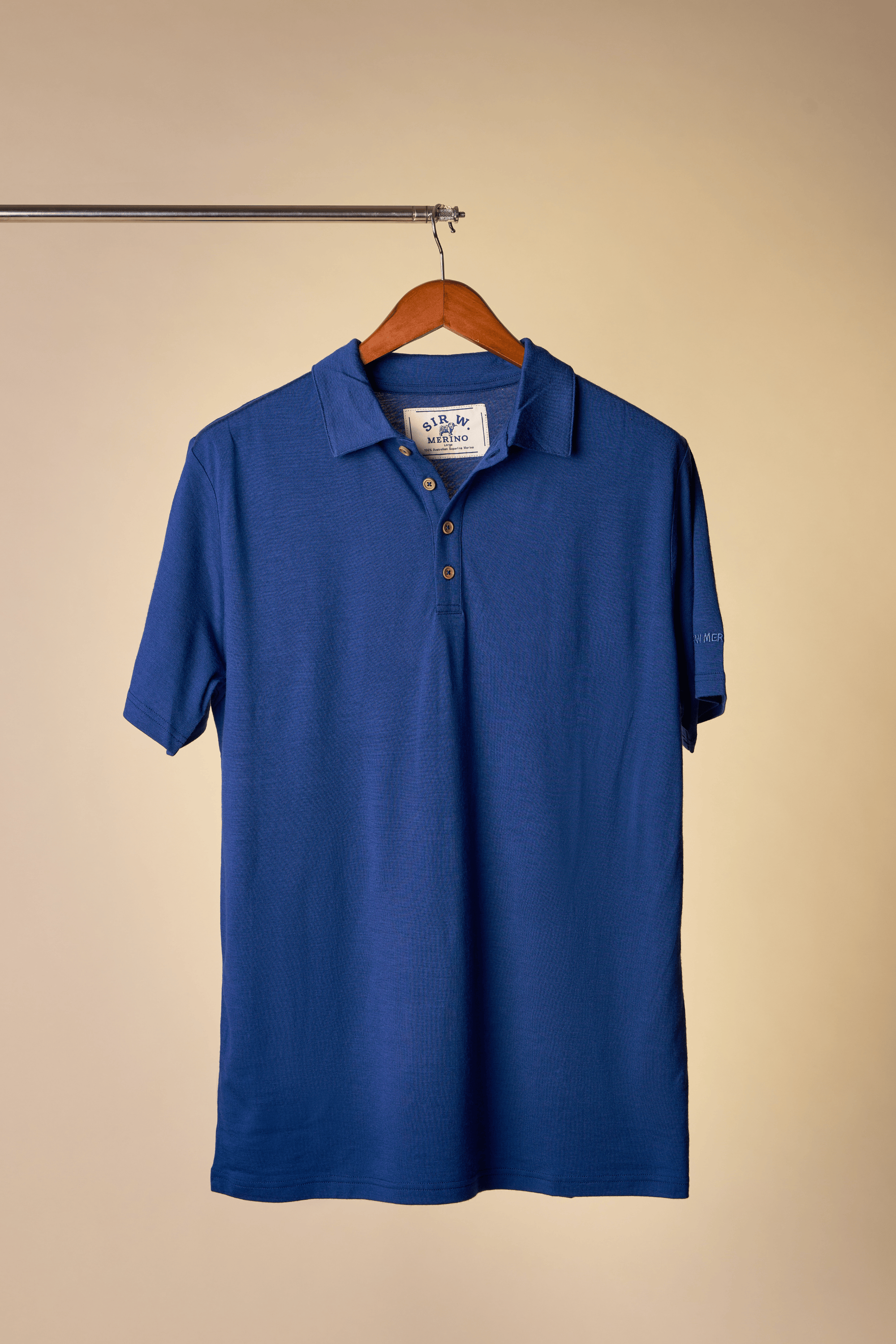
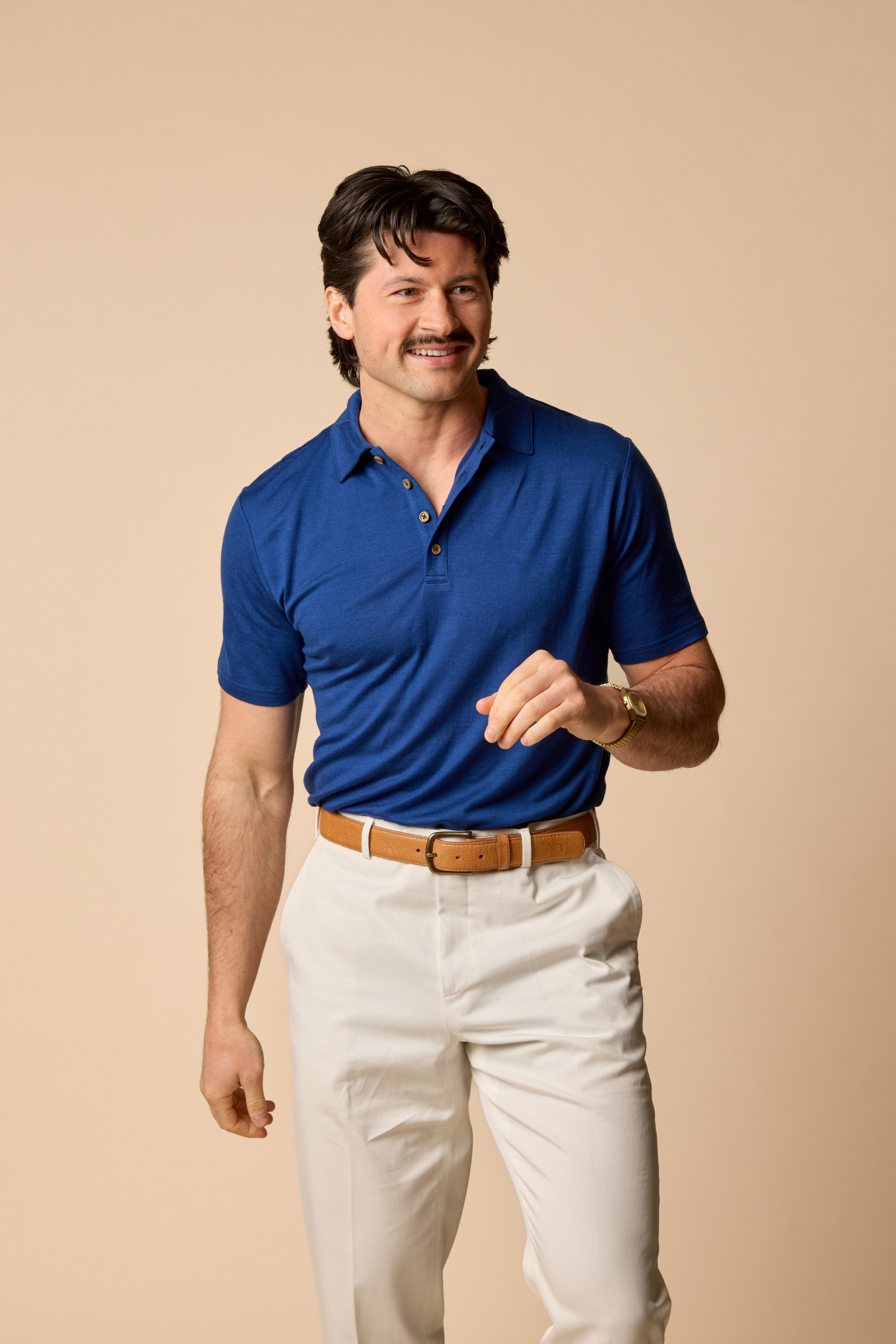
The Quick Answer
Merino is a natural fibre that is extremely breathable, sweat-wicking, fast drying and completely odour resistant.
Cotton is comfortable but holds odour and wrinkles. Polyester feels nice once, but traps heat, odour and sheds plastic into every wash.
If you want the rest, keep reading.
The Long Answers
Most people wash shirts after every wear — not because the shirt is dirty, but because it smells.
Body odour isn't sweat. Sweat is sterile. Odour is the result of bacteria breaking down sweat over time, which happens fastest in fabrics that hold moisture against the skin. Cotton holds moisture. Polyester holds moisture and traps it. Both are bacterial paradises.
Merino does something different. The wool fibre is hydrophilic on the inside but hydrophobic on the outside — moisture is wicked away from your skin and held inside the fibre core, where bacteria can't easily access it. The fibre also contains natural keratin proteins that bind to and neutralise odour compounds.
The practical result: a Sir W. shirt can be worn for five to ten days between washes without ever smelling. Hang it overnight in fresh air and the odour from a long day disappears. We've had customers wear a single shirt across a two-week European trip and report it never reached "needs washing" by smell.
This isn't a marketing claim. It's a property of the material.
The phrase "temperature regulating" is overused in clothing marketing to the point of meaninglessness. With merino, the science is real and worth understanding.
A merino fibre has a complex internal structure that can absorb and release moisture vapour without feeling wet to the touch. When you're hot and your body produces sweat vapour, the fibre absorbs it — and the act of absorption releases a tiny amount of latent heat, cooling the air against your skin. When you're cold and the air around you is dry, the same fibre releases its stored moisture, warming the air at the skin barrier.
This is why desert nomads wore wool, not cotton. It's why mountain climbers still use merino base layers in the snow. It's why the same shirt that keeps you cool in 30°C heat keeps you warm in 5°C cold.
The practical result: one shirt that genuinely works across climates. You stop overpacking. You stop changing outfits between morning meetings and evening dinners.
Every load of synthetic clothing — polyester, nylon, acrylic, fleece — sheds tens of thousands of microplastic fibres into the wash water. Those fibres pass through wastewater treatment, enter rivers and oceans, and eventually accumulate in the food chain. Estimates suggest synthetic clothing is responsible for roughly 35% of all ocean microplastic pollution.
Merino is a natural protein fibre. It does not shed microplastics. Ever.
At the end of its useful life, a wool garment can be composted and will fully biodegrade within twelve months in healthy soil. The garment you bought becomes garden compost. Try that with a polyester travel shirt.
We're not going to lecture you about climate ethics. We just want you to know what you're buying.
Most "soft" fibres — cotton jersey, silk, modal — drape beautifully but lose their shape after a few wears. Most fibres that hold shape — denim, structured wool, polyester blends — feel stiff against skin.
Merino is the rare fibre that does both. Our shirts feel softer than cotton against bare skin, but they also hold their drape after a full day of wear, drop wrinkles overnight, and don't sag at the neck or hem after fifty washes.
The reason is the fibre's natural elasticity. Wool fibres can stretch up to 30% of their length and return to original shape — far more than cotton or silk. This elasticity means the garment forgives daily wear and recovers between uses.
Common Questions
No, if it's superfine like ours. Standard wool is itchy because the fibres are thick enough to poke skin instead of bending against it. Our wool sits at 17.5 microns — finer than human hair — which means it bends like cotton. If your first Sir W. shirt feels uncomfortable in the first wear, we'll refund it. Full stop.
Yes, often better than cotton. Merino wicks sweat away from skin and releases it as vapour through the fibre. It also reflects UV, so it actually keeps you cooler in direct sun than cotton does.
Not if you wash it cold and lay it flat to dry. Merino shrinks if you put it in hot water or a tumble dryer — the heat causes the wool fibres to bind to each other (this is how wool felt is made). Cold wash, flat dry, no problem.
Yes. Merino is one of the best workout fabrics that exists. The Cassius athletic tee is designed for it. You can run, hike, or train in it, and it won't develop the permanent odour that polyester workout gear acquires within a few wears.

Featured collection
Signature Sir W. Merino