By Jock Merriman, fifth-generation Australian Merino woolgrower and founder of Sir W. Merino
A single Merino fleece is not one kind of wool. It is several, and the person who separates them has more say over how your shirt feels than any designer ever will.
I grew up around this. My family has grown Merino since 1880, and my father George still runs the Merryville stud in Boorowa, New South Wales. So when I moved to Austin in 2018 and started talking about Merino to people who had mostly worn polyester, I noticed that nobody asked me about the part I find most interesting: what happens to the fleece between the sheep and the yarn.
One sheep, several grades
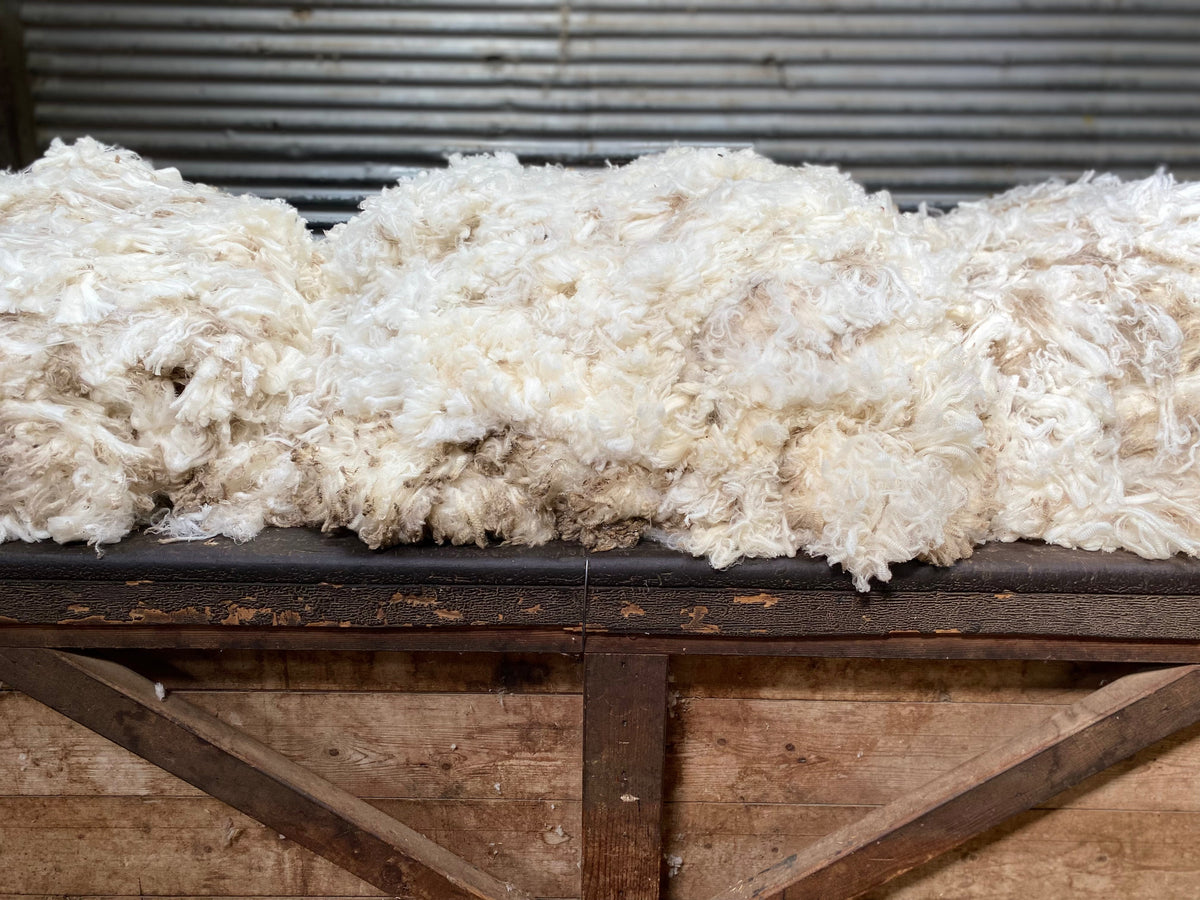
A fleece comes off the animal in one piece, but it is not uniform. In broad terms the wool on the shoulders and along the back is the finest and most even. The wool around the britch (the back legs), the belly and the neck is coarser, shorter or dirtier. A Merino sheep grows wool of very different quality on the same body.
The first job, once the fleece is on the table, is skirting. The edges are trimmed away, along with anything that does not belong in the main line: stained wool, seeds, burrs, loose bits. What remains is as even as it can be made.
Sorting on three things
The classer then sorts the wool into lines of consistent quality. Three properties drive almost every decision:
- Fineness, measured as fibre diameter in microns.
- Staple length, the length of a lock of wool when it is not stretched.
- Strength, how much tension a lock can take before it breaks.
Weak wool makes more waste in spinning and tends to be used for felt. Short, coarse wool goes to uses where nobody is wearing it against their neck. The main line, the long, strong, fine wool, is what goes on to make fine garments. In Australia, Merino fleece is also measured objectively for diameter, yield, staple length and strength, so the classer's eye is backed by numbers.
Why the micron is the number that matters
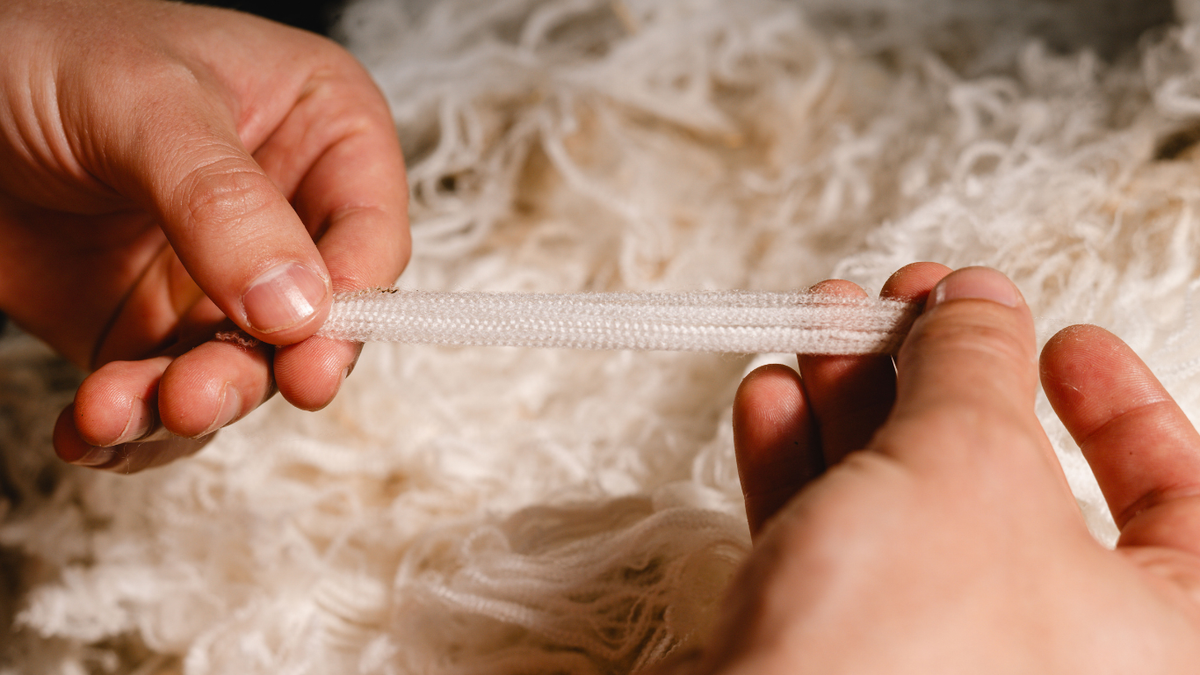
A micron is one-millionth of a metre. A human hair is typically somewhere around 50 to 100 of them. Superfine Merino is a fraction of that, and the difference is the whole story of comfort.
The sensation people call "itchy wool" is not an allergy. Research reviewed by Australian Wool Innovation puts it down to mechanical irritation: fibres thicker than roughly 19.5 microns do not bend easily when they press against skin, and your nerve endings register a tiny prod. Finer fibres simply bend. Put a stiff bristle and a hair against your forearm and you will feel exactly what I mean.
That is why fibre diameter, not the word "Merino", is the figure to care about. Merino is a breed. Micron is a grade. Two shirts can both be honestly labelled 100% Merino and feel nothing alike, because one was knitted from wool that averaged 24 microns and the other from wool that averaged well below that.
What this means for a shirt
Fine fibre is also what lets a Merino shirt work as a base layer. It bends, so it sits against the skin without a fight. It is a natural, high-performing fibre that needs less washing than polyester, and it can hold a good deal of moisture vapour before it feels damp. None of that is a finish or a treatment. It is the structure of the fibre, and it is decided long before the knitting starts.
Our yarn sits at roughly 17.5 to 19 microns, and I would rather tell you the number than the adjective. The Cassius is the plainest demonstration: a tee in that range, worn hard, is a good test of whether a fibre can sit against skin for a whole training session without complaint.
The honest limits
Micron is not everything. The way a yarn is spun, how a garment is knitted and how it is finished all affect feel and durability, and a very fine fibre can still be badly made into a shirt. Averages also hide spread: a lot of fine fibre with a handful of coarse ones can still prickle, which is why the industry looks at the proportion of fibres above the comfort threshold as well as the headline number.
And I should be straight about the heritage point. Our family's stud is where I learned to read a fleece. It is not where our garments' wool comes from, and I do not claim it is. What I bring is the standard I was raised on: a respect for fine, even, strong wool, and the habit of asking what the number is.
What to ask before you buy
Ask for the micron. A brand that knows its fibre will tell you. If the answer is a pause and a mention of "premium", you have learned something too. If you want the longer version of how Merino performs, the Merino Field Guide covers it.
— Jock Merriman, Founder · 5th generation