The Merino Field Guide
SIR W. MERINO
Australian Merino Since 1880
The Merino
Field Guide
What the fibre does, how to care for it, and how to pack far too little and get away with it.
Chapter One
Why merino behaves the way it does
Merino isn't a technology. It's an animal's survival strategy that happens to fit a shirt. The sheep my family runs at Boorowa stand in 105°F summers and hard winter frosts wearing the same fleece — because the fibre solves both problems at once. Three properties do the work.
1. It moves moisture as vapour
Cotton absorbs sweat as liquid and holds it against your skin — that's why a damp cotton shirt feels damp. Merino is hygroscopic: it draws moisture vapour into the fibre itself, binds it to the wool's keratin, and releases it to the drier air outside. The shirt can carry a serious fraction of its own weight in moisture and still feel dry to the touch.
2. It regulates in both directions
The natural crimp — the springy zigzag in every fibre — traps air when it's cold and lets heat vent when it's hot. Absorbing vapour also releases a small amount of warmth, which is why stepping from a hot street into an over-air-conditioned room lands softer in merino. Same shirt, opposite jobs.
3. It resists odour
Bacteria make cotton and polyester smell by feeding on trapped sweat. Merino's fibre structure gives odour compounds little to cling to, and its moisture handling keeps the surface drier. The practical translation: multiple full days of wear between washes — genuinely, not as marketing.
“Same wool. Same animal. Tell me why anyone makes shirts out of anything else.”
— George MerrimanChapter Two
Care: the lazy approach is the correct one
The single most common mistake with merino is treating it like cotton and washing it constantly. Washing is what wears clothes out. Merino's whole advantage is that it barely needs it.
After a wear
Hang it up overnight somewhere with air. That's it. The fibre releases moisture and odour on its own. It will be fresh again by morning far more often than you expect.
Washing
When it genuinely needs it — every five to seven wears is typical — machine wash cold on gentle (or wool cycle), inside out, with a mild detergent. No bleach, no fabric softener; softener coats the fibre and kills its moisture handling.
Drying
Never the tumble dryer. Lay flat or hang to dry away from direct sun. Merino dries fast — overnight, usually.
Wrinkles
Hang it and they drop out, typically overnight. Travelling: hang it in the bathroom during a hot shower and give it ten minutes. An iron is almost never required; if you must, low heat with a cloth between.
Storage
Folded or hung, clean, dry. For long storage, wash first — moths go for wear residue, not clean wool — and use cedar if you're being thorough.
Pilling
A little early pilling on a new knit is normal — loose fibre ends working free. Remove with a fabric comb or shaver; it settles down after the first few washes.
Chapter Three
Packing: the one-bag arithmetic
Last July I did fourteen days across Italy and Ireland out of one carry-on: Lake Como boat days, the Tuscan heat in Impruneta, a night in Bologna, cool grey Dublin, and a castle wedding in Kildare. The shirt count was three — two Bruces and a Cassius. I didn't wash them once. Hung them at night, wore them again.
That trip is the argument in miniature. Cotton needs a shirt per day. Polyester needs a wash per wear. Merino needs neither, so the bag closes. The arithmetic that works:
The 3-shirt fortnight
Two collared merino shirts in different colours, one merino tee. Rotate: collar for dinners and nice days, tee for heat and movement. Hang everything nightly.
Colour maths
Pick colours that all work with every trouser you're bringing. Two shirts that both pair with everything beat four that each pair with one thing.
The overnight rule
Whatever you wore today, hang it tonight. Tomorrow it goes to the back of the rotation, not the laundry bag. There is no laundry bag.
The one exception
Formal occasions still want formal clothes. I carried a tux for the wedding. It was the only thing in the bag that did just one job — which is rather the point.
Fourteen days. Three climates. Three shirts. Zero washes.
Read the full trip →Chapter Four
The three we make
The Bruce · $125
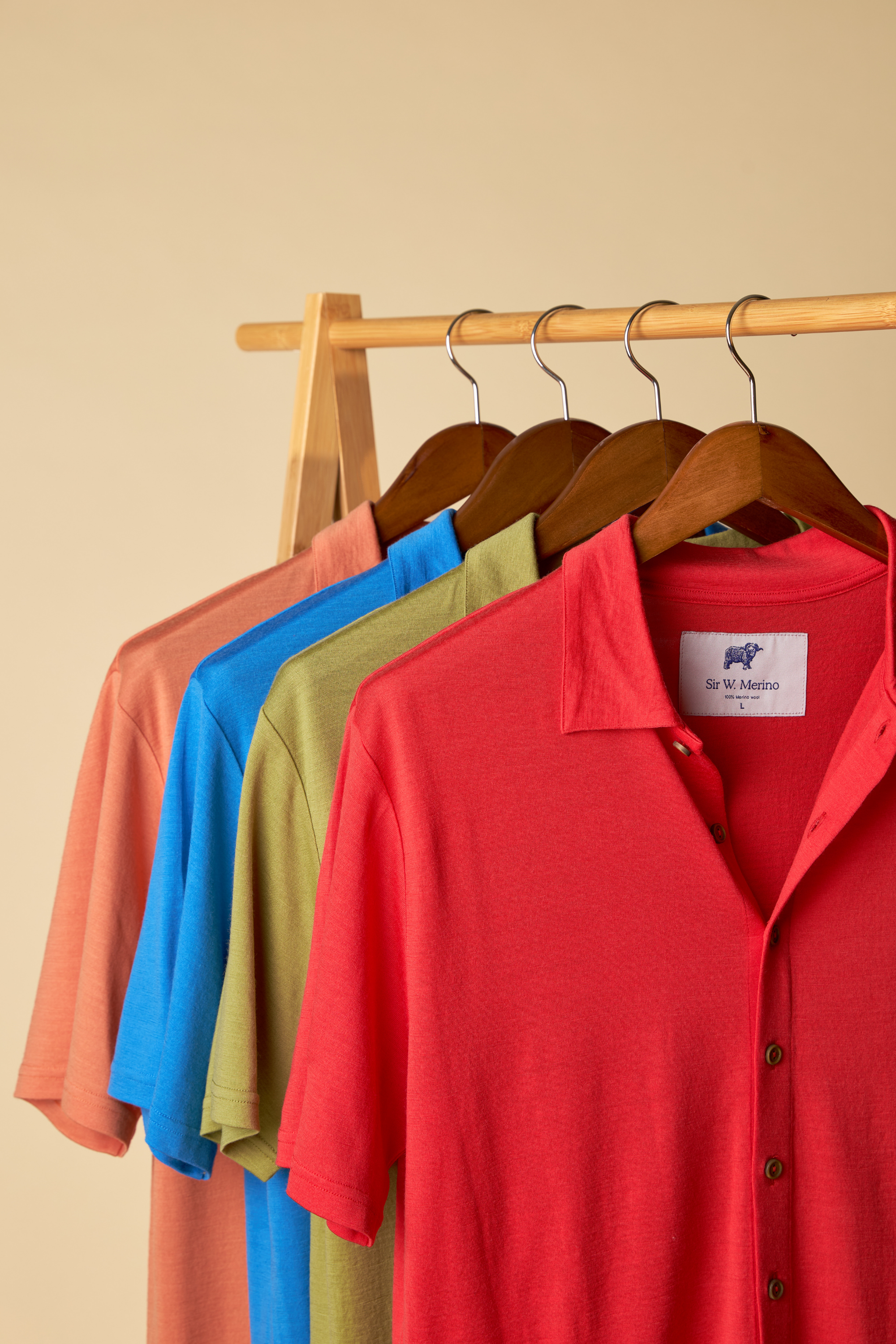
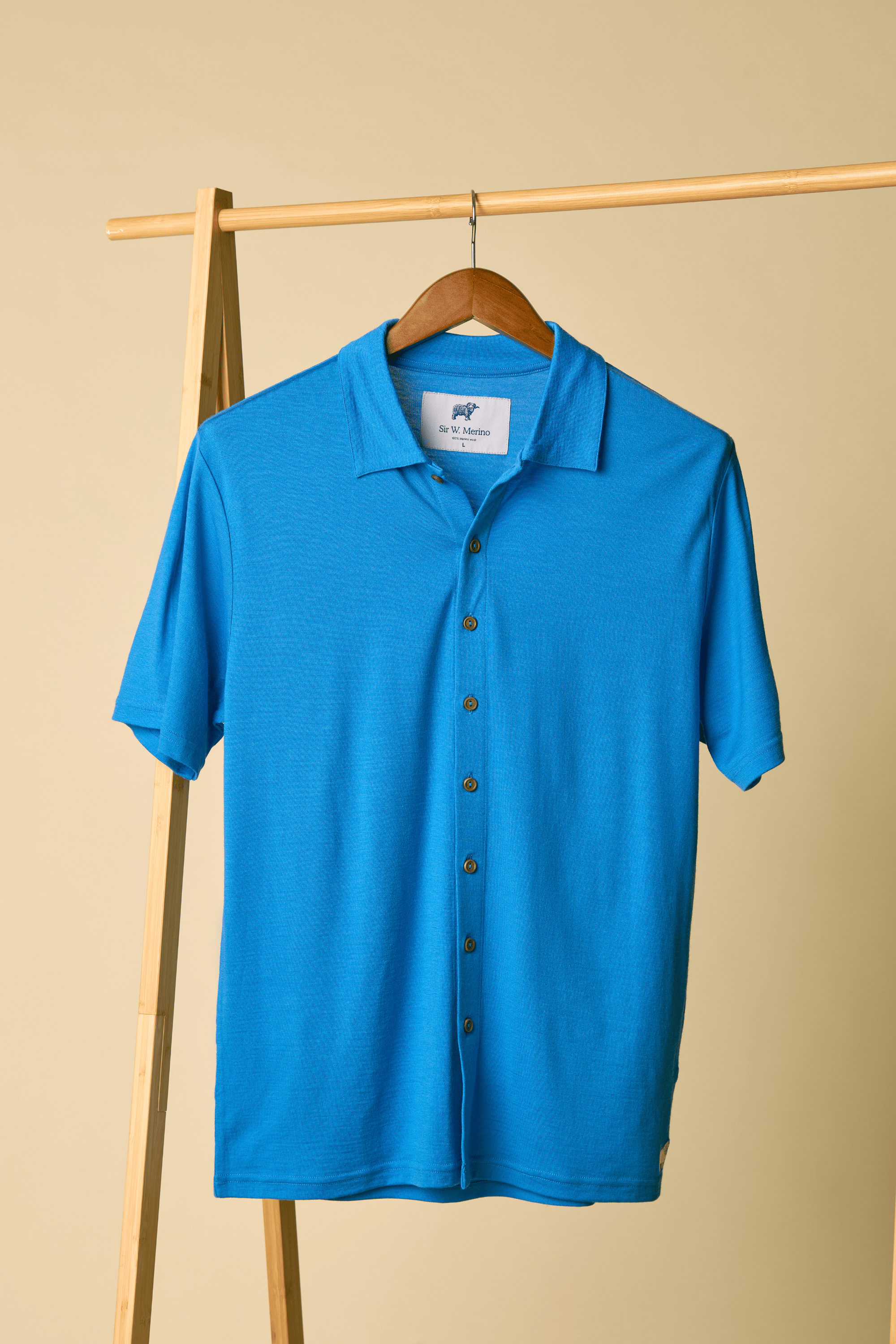
Short-sleeve merino button-up. The collar that goes from a boat to a long lunch to dinner without a change. If you're buying one shirt, it's this one.
The George · $110
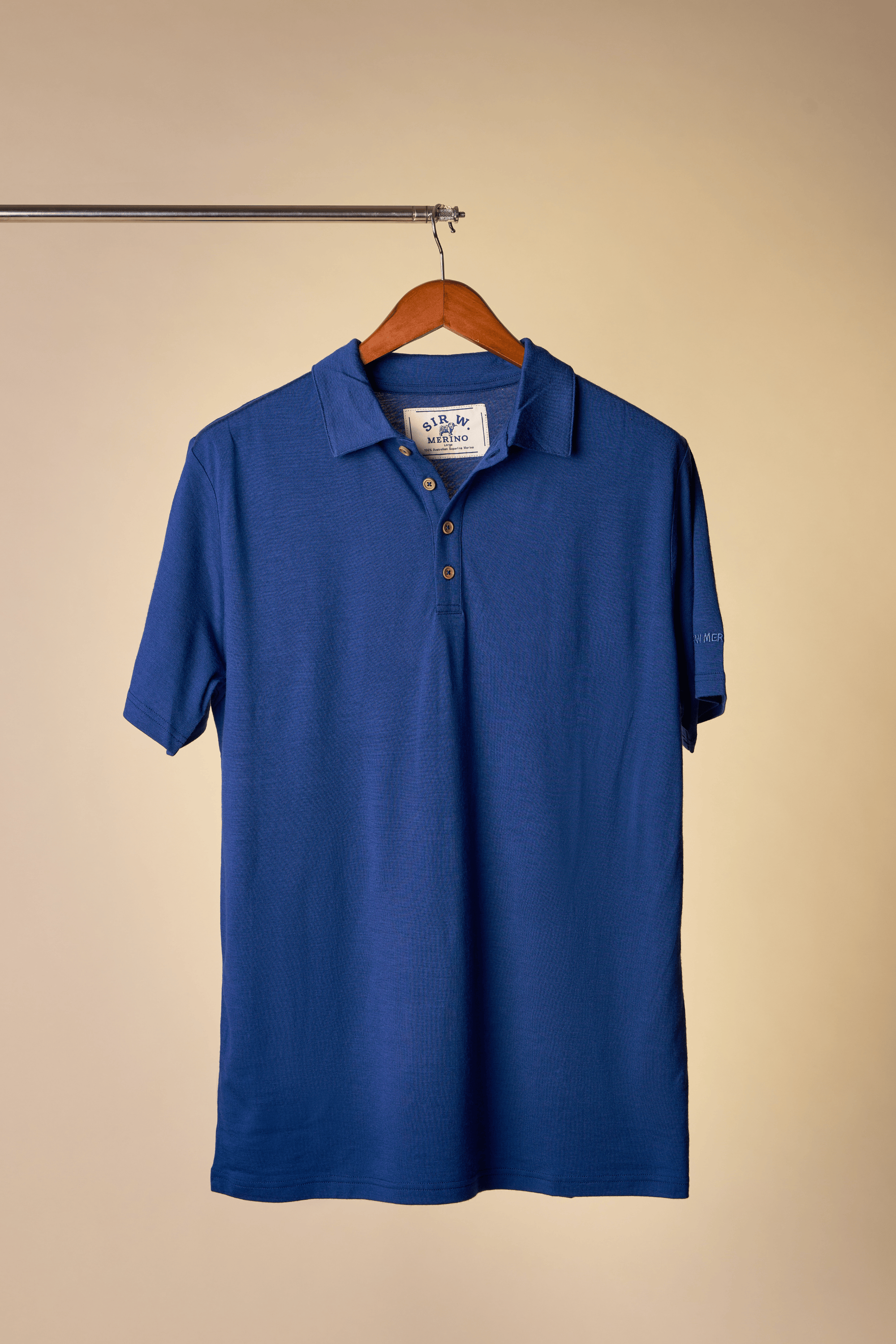
The all-day merino polo. The no-decision shirt: train, porticoes, dinner, repeat. Named for my father.
The Cassius · $90
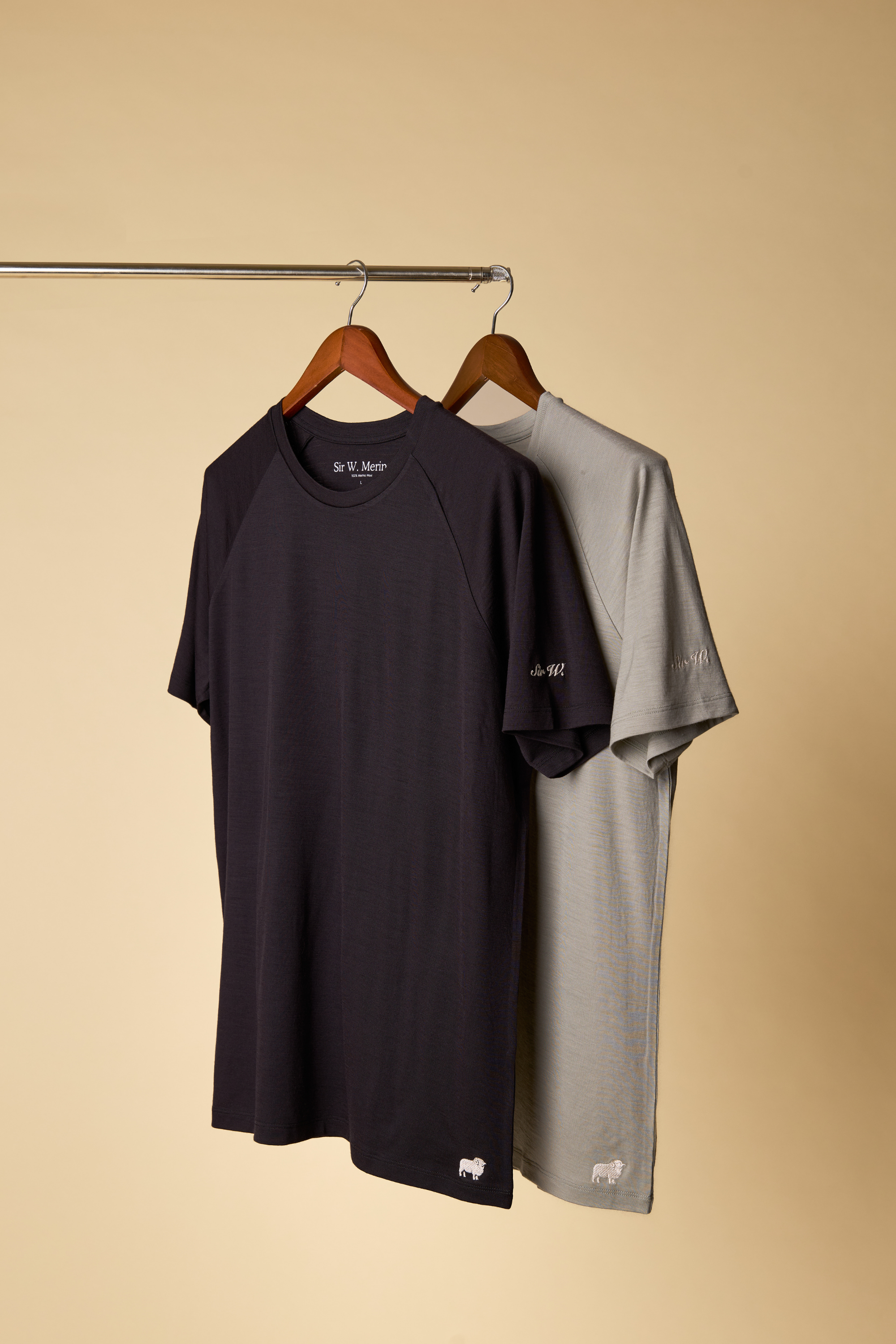
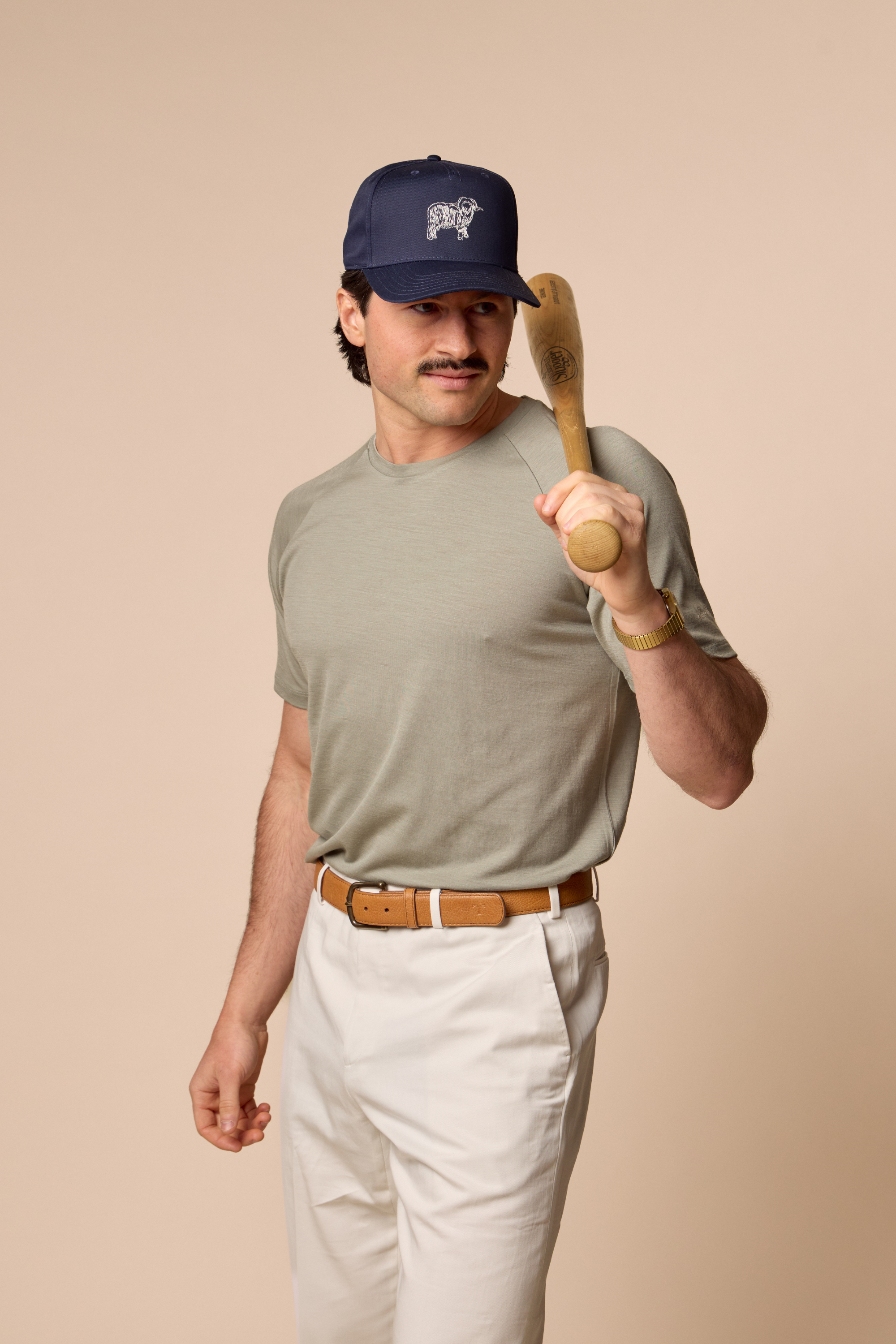
Superfine merino athletic tee. Takes the hottest hours and the gym, and comes back fresh by morning. The one people don't believe until they wear it.
A note on why they exist at all: my family has grown Merino on the same bloodline since 1880 — through my great-grandfather Sir Walter Merriman, knighted for his contribution to the fibre, down to my father George at Boorowa today. I started Sir W. Merino in Austin because most American men have never worn the fibre my family has spent five generations perfecting, and that seemed worth fixing with three shirts made properly rather than twenty made adequately.
We don't run seasonal collections and we don't run sales. A good merino shirt lasts four to seven years. The fix isn't more stuff. It's less stuff, made better.
— Jock Merriman
Founder, Sir W. Merino · 5th generation
Start with one shirt — or all three.
The Starter Set: The Bruce, The George and The Cassius together, $35 less than buying them apart.
Shop The Starter Set →Featured collection
Signature Sir W. Merino