Filed under the Field Guide, chapter three — packing.
G'day. A few weeks back I flew out of Austin with one carry-on bag, no checked luggage, and enough shirts to last two weeks across Italy and Ireland. Bellano on Lake Como, then Impruneta, then Bologna, then Dublin, then a castle wedding at Kilkea. Fourteen days, one bag, three shirts. I didn't wash a single one of them.
I want to walk you through exactly what went in that bag and why, because "pack light" is easy to say and genuinely hard to do well. Most packing lists are written by people who packed once, for one kind of trip. This one's written by a bloke who packs for a living — I pack every order that leaves our warehouse — and who's now tested this particular list across a lake town, a hill town, a big city, another big city, and a wedding.
The problem with most "one bag" advice
Most one-bag guides solve the volume problem and ignore the real one, which is laundry. You can fit seven days of clothes into a carry-on if you're clever about folding. You cannot fit fourteen days of clothes into a carry-on no matter how you fold them. So the guides either tell you to find a laundromat (fine, if your itinerary allows it — mine didn't) or they quietly assume you're fine wearing the same cotton shirt for three days running, which, respectfully, your travelling companions are not fine with.
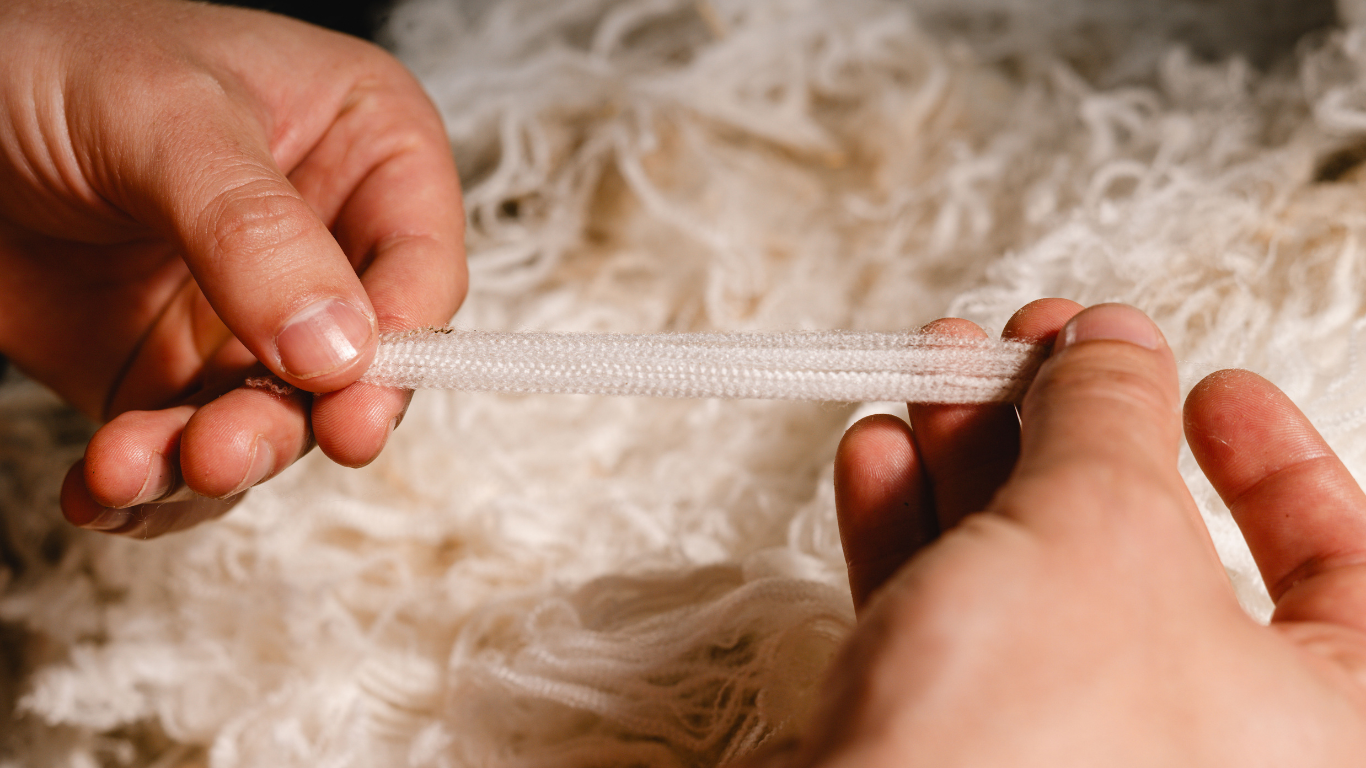
The actual solve is fibre, not folding. A shirt that can be worn for days without smelling gets you out of the laundry problem entirely, and that's the whole trick behind packing three shirts for fourteen days. It's not a magic bag. It's Merino wool, which is naturally odour-resistant because the fibre itself is antimicrobial — bacteria that cause smell struggle to establish on it the way they do on cotton or synthetics. I've written more on the science of that in the Field Guide, but the short version is: wool was solving this problem for sheep for a very long time before it started solving it for travellers.
What actually went in the bag
Here's the real list, not the aspirational one:
- Two Bruce short-sleeve button-ups — French Blue and Olive Green. One reads smart-casual for dinner, the other works for a day of walking. Both went straight from a hill town to a wedding without an iron in sight, because Merino resists creasing far better than cotton.
- One black Cassius tee — for flights, early starts, and the one morning I went for a run along Lake Como. Doubled as a base layer under the Bruce on the cooler Dublin evenings.
- One pair of trousers, one pair of shorts, a light jacket, and the usual underlayers and toiletries. Nothing exotic. The shirts were doing the heavy lifting, not the rest of the kit.
That's it. Three shirts, fourteen days, zero washes, and I never once felt like I was wearing something stale. I rinsed a shirt in a sink basin once in Bologna out of habit more than necessity, and it was dry by morning — Merino doesn't hold water the way cotton does, so it doesn't need a dryer or a warm climate to bounce back.
Why three shirts, specifically
Three isn't an arbitrary number. It's one for "today," one for "yesterday, airing out," and one spare in case a shirt needs an actual wash or you spill wine on it at a wedding (I did not, but I packed for the possibility). Rotate through three and you're never stuck, and you're never carrying more than you need. If you're travelling for a week or less, two shirts does the job — that's roughly what our Starter Set is built for, one of each shirt style so you've got a rotation ready to go without having to think about it.
The rest of the philosophy
One-bag travel isn't really about the bag. It's about not wanting to think about your clothes while you're meant to be looking at Lake Como. Every piece I packed had to do at least two jobs — smart enough for dinner, comfortable enough for a train, cool enough for an Italian afternoon, warm enough layered under a jacket for an Irish one. Merino does all of that because it's a genuinely temperature-regulating fibre, not because of some finish sprayed onto synthetic fabric. It's grown that way. My family's been growing it since 1880, and the fibre hasn't needed reinventing since — just better tailoring around it.
If you want the fuller version of this — the fibre science, the folding method, what I'd pack differently for a cold-weather trip — it's all in the Merino Field Guide. And if you want the day-by-day account of this particular trip, including the wedding, that's over on the Europe journal.
Pack less. Wash less. See more of the lake and less of a laundromat.
— Jock Merriman, Founder · 5th generation