Where Your Sweat Goes: How Merino Actually Handles Moisture
Cotton holds sweat against your skin. Merino pulls it into the fibre and lets it go. The difference is physics — and it's the whole reason The Cassius works the way it does.
By Jock Merriman, Founder of Sir W. Merino
Here's a feeling you know: the cotton tee that's fine for the first ten minutes of a workout and a cold, clinging mess by the end. The travel day where you land in the same shirt you boarded in and can feel it stuck to your back. The walk that turned into a hill on a warm afternoon.
Cotton's problem in all three is the same. It holds water — that's literally what we make towels out of. And once sweat is in a cotton shirt, it sits there as liquid against your skin until you take the shirt off. Merino does something fundamentally different, and it's worth understanding why, because it isn't marketing. It's the structure of the fibre.
Absorbent and hygroscopic aren't the same thing
This is the distinction that explains everything else. Cotton is absorbent: it soaks moisture onto its surface and into the gaps between fibres, where it stays as liquid. That's why a sweaty cotton shirt feels wet — because it is.
Merino is hygroscopic: it draws moisture vapour into the interior of the fibre itself, binding it to the wool's keratin structure before it ever becomes liquid water sitting on your skin. Fine merino can take on a remarkable amount of moisture — a substantial fraction of its own dry weight — and still feel dry to the touch. The sweat is being managed inside the fibre, not pooled against you.
That's the gap between a shirt that feels soaked and a shirt that feels fine while quietly doing the work.
The part nobody mentions: it buffers temperature while it does this
When merino absorbs moisture vapour, the process releases a small amount of heat — a real, measurable effect. In plain terms: when you step out of warm air into a cold cabin and start to cool down, the fibre softens the swing instead of leaving you clammy and chilled. You never notice it happening, which is rather the point. A fabric that manages moisture and steadies your temperature is doing two of travel's and training's hardest jobs at once.
Then — crucially — it lets the moisture go
Absorbing water is only half the trick. A sponge absorbs water. What makes merino work as apparel is that it releases that moisture back out as vapour to the drier air outside the shirt, continuously, so the fibre resets itself and keeps going.
Cotton just sits at saturation, waiting for you to peel it off. Merino keeps moving moisture from the humid side — you — to the dry side — the room — which is why it never reaches that heavy, sodden point in the first place. It's also why merino dries far faster than cotton: rinse one in a hotel sink at night and it's ready by morning.
Why this lands hardest in The Cassius
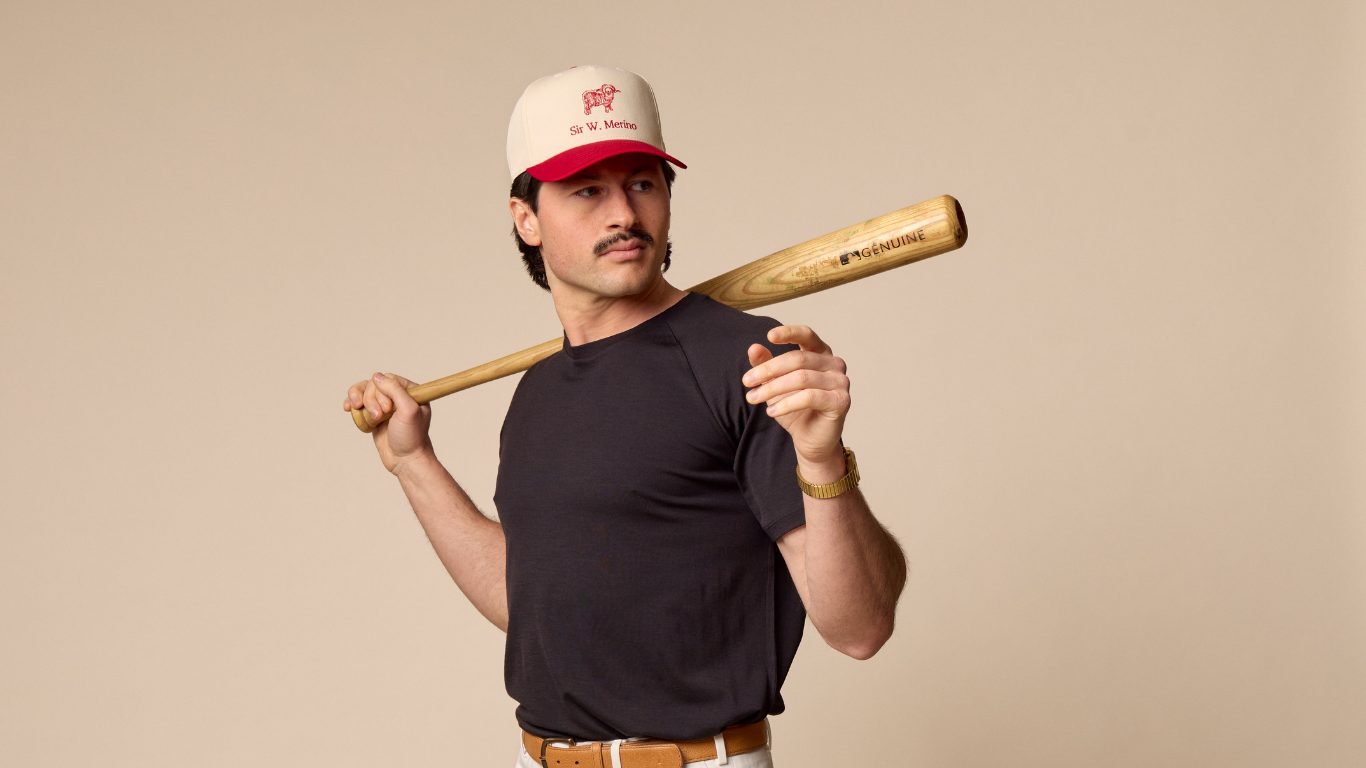
We built The Cassius as the athletic tee — the shirt you'd actually set out to sweat in. The gym, then lunch, without a change in between. A travel day that turns into a sprint for the gate. A walk that turns into a climb. It's the shirt where moisture management stops being a line on a spec sheet and becomes the entire experience of wearing it.
And here's the part that matters most: the fibre quietly wicking your sweat is also fine enough that it doesn't itch while it does it. The Cassius is woven from superfine merino at 17.5–19 microns. Coarse wool itches because thick fibres are stiff enough to prod your skin; superfine merino sits well under that threshold and bends instead. So you get soft against the skin and dry against the skin, from the same fibre, at the same time — then it's ready to go again tomorrow.
That's the honest version of "performance fabric." No chemical coating, no synthetic treatment that washes out after twenty cycles and leaves you with a shirt that smells like a gym bag. Just a fibre that's been solving the moisture problem on a sheep's back for a very long time, doing the same job on yours.
The bottom line
Sweat is going to happen — in the gym, on the road, on a hot afternoon. The question is only what your shirt does with it. Cotton holds it against you. Merino takes it in, steadies your temperature, and breathes it back out, so you stay dry and comfortable through the parts of the day that leave cotton beaten.
That's not a claim. It's just what the fibre does — and it's the reason The Cassius is the shirt I reach for when I know I'm going to work up a sweat.
Meet The Cassius →
Or get all three in The Starter Set →
Frequently Asked Questions
Does merino keep you dry better than cotton?
Yes — but through a different mechanism. Cotton absorbs sweat and holds it as liquid against your skin, so it feels wet. Merino is hygroscopic: it draws moisture vapour into the fibre itself and releases it to the air outside, so it keeps feeling dry even while it's managing a lot of moisture.
Will a merino shirt feel sweaty in the gym?
Far less than cotton. Merino moves moisture off your skin and breathes it back out continuously rather than holding it, so it doesn't reach that heavy, clinging, saturated point. It also resists odour, so a training tee stays fresh across more than one session.
Is superfine merino itchy when you sweat in it?
No. Itch comes from coarse, thick wool fibres being stiff enough to prod the skin. The Cassius is woven from superfine merino at 17.5–19 microns, which is fine enough to bend rather than prod — soft against the skin whether you're dry or working up a sweat.
How is merino different from synthetic performance fabrics?
Synthetics wick moisture but trap odour, which is why technical tees often smell after one wear and rely on chemical treatments that fade with washing. Merino manages moisture and resists odour naturally, through the structure of the fibre itself — nothing to wash out over time.
Can you wash a merino athletic tee quickly while travelling?
Yes. Because merino releases moisture so readily, it dries much faster than cotton. A quick sink wash in the evening with a little soap, and the shirt is usually dry by morning.
Jock Merriman is the founder of Sir W. Merino and a fifth-generation Australian wool farmer. His family has been growing Merino wool since 1880. Sir W. Merino makes three superfine merino shirts — The Bruce, The George, and The Cassius — designed in Austin, Texas. Read the family story →