One Shirt, Five Rooms: The Case for a Smaller Wardrobe
Why the best-dressed men tend to own fewer clothes — and how a single superfine merino shirt quietly does the work of a closet.
By Jock Merriman, Founder of Sir W. Merino
Open most men's wardrobes and you'll find the same thing: a great deal of fabric, very little of it worn. The research has been pointing this way for years — most of us wear something like a fifth of what we own, most of the time. The rest hangs there as evidence of decisions that didn't pan out: the shirt that fit in the shop, the colour that looked braver on the rack, the third near-identical navy thing bought because it was on sale.
The instinct, when you don't feel well dressed, is to buy more. It is almost always the wrong instinct. The men who look genuinely put-together rarely own the most clothes. They own the right few, and they wear them hard. A smaller wardrobe isn't a sacrifice. It's the whole trick.
What "versatile" actually means
Versatile is a word menswear brands throw around until it means nothing. Let's make it specific. A versatile garment is one that holds its shape, its freshness, and its dignity across a long day and a range of temperatures — so the same shirt that opened your morning can close your evening without a change.
That is a tall order for a fabric, and it's precisely where fibre matters more than cut. Cotton is a fine fibre — roughly 15 to 20 microns, same neighbourhood as the superfine merino we use — so this was never a contest about fineness. The difference is what each fibre does once it's on your back through a real day.
Merino regulates temperature actively, moving warmth and moisture away from the skin as your environment swings from an over-air-conditioned office to a hot pavement at six o'clock. It handles perspiration as vapour before it ever becomes a damp patch. And it resists odour — not because of any farmyard residue (the wool's natural grease is scoured out long before it becomes cloth), but because of the structure of the keratin fibre itself, which gives odour-causing bacteria far less to work with. The practical upshot is plain: a shirt that still looks and smells considered at the end of the day is a shirt you can wear into the next room without thinking about it.
The one-shirt day
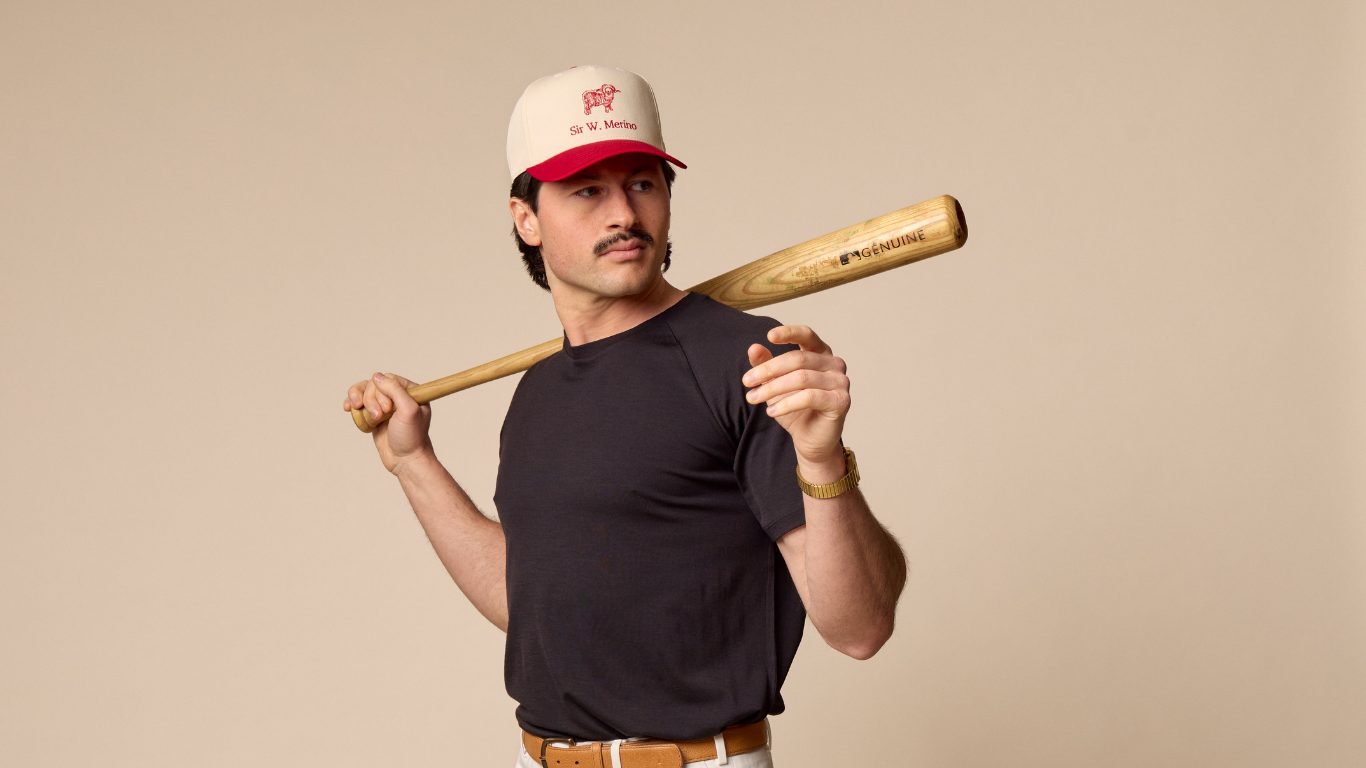
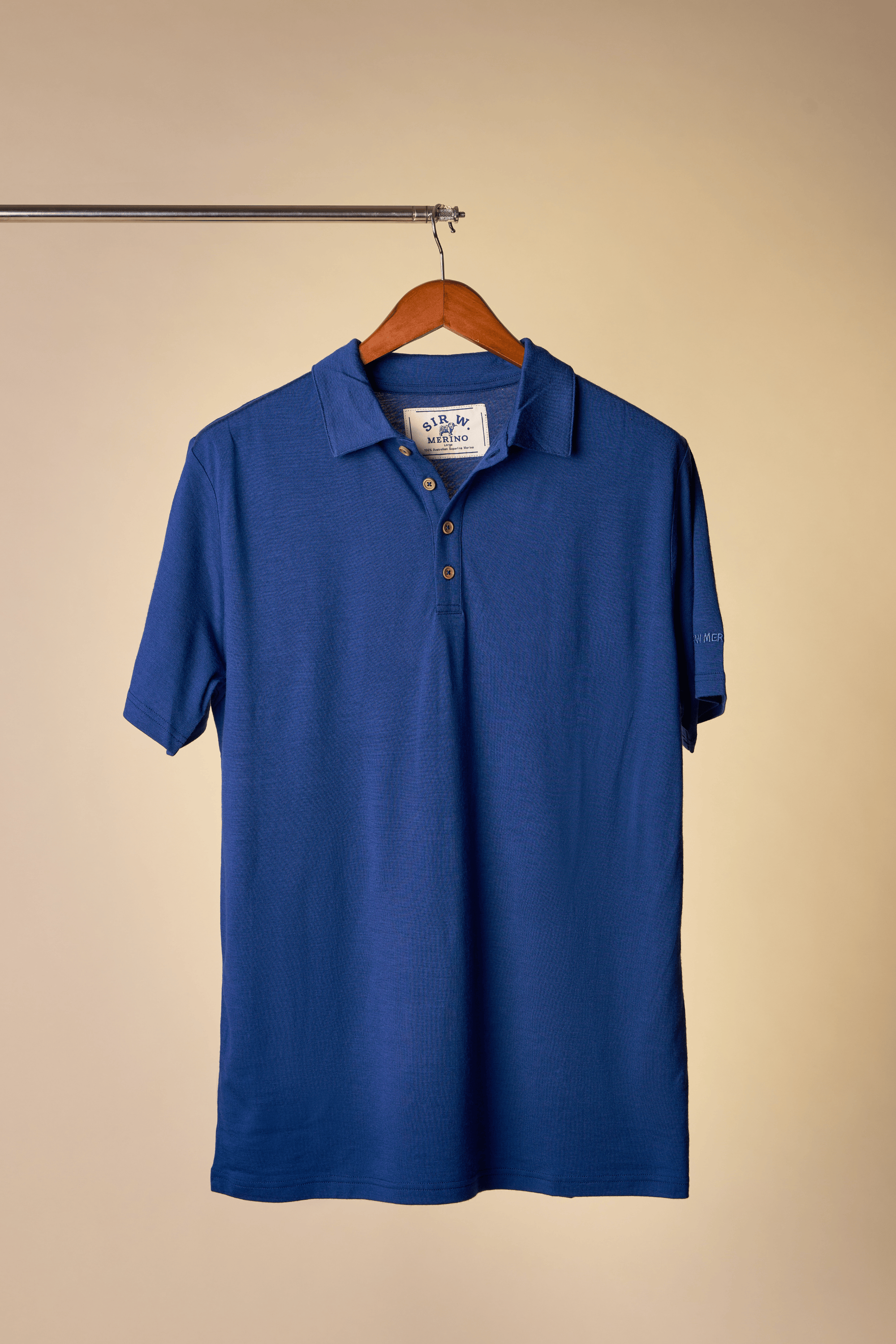
Here is the case in motion. Take The George, our superfine merino polo. At a desk it reads as a collar — quietly smarter than a tee, no effort showing. At a client lunch it sits perfectly under a jacket. Through the afternoon it keeps its shape where cotton would have gone soft and creased at the elbow. Come dinner it's still crisp enough to leave the jacket on the chair. One shirt, five rooms, no costume changes.
For warmer days and looser settings, The Bruce — our short-sleeve merino button-up — does the same work with the collar undone and the sleeves where they belong. It's the rare warm-weather shirt that looks deliberate rather than defeated by the heat, because the fabric is doing the cooling so you don't have to keep adjusting. Smart-casual is the hardest dress code precisely because nobody can define it; a fine merino shirt is the closest thing to a cheat code, because it always lands on the dressed side of the line.
The arithmetic of fewer, better
Spend a little time with cost-per-wear and the maths stops flattering a full closet. A $30 shirt worn five times before it pills and sags costs you six dollars a wear and a slot in the laundry pile. A well-made merino shirt worn a hundred times — to the office, to dinner, on the road, through a summer — quietly drops under a dollar, and asks to be washed far less often along the way. You are not paying more for a shirt. You are paying once instead of repeatedly, and getting back the thing a crowded wardrobe steals: the certainty that what you reach for will work.
Buy fewer things. Choose them properly. Wear them until they've earned their keep, and then some. It is, as it happens, also the more honest way to dress — and the brands worth respecting are the ones honest about how their clothes are made. Ours are designed in Austin, Texas and manufactured in Shanghai by Diyang, a factory that specialises in fine merino apparel for premium labels. We'd rather tell you that than dress it up.
The bottom line
Style isn't volume. It's the quiet confidence of owning a few genuinely good things and knowing each one will hold up across whatever the day asks of it. A superfine merino shirt earns its place in a smaller wardrobe by doing the work of several — regulating temperature, shrugging off odour, holding its shape from morning to night. Get the few right, and you'll never miss the many.
Wear it for yourself
If you're building the smaller, better wardrobe, start where it counts. The George ($110) is the most versatile single shirt we make — desk to dinner without a second thought. Prefer an open collar in the heat? The Bruce ($125), our short-sleeve button-up, is summer smart-casual sorted.
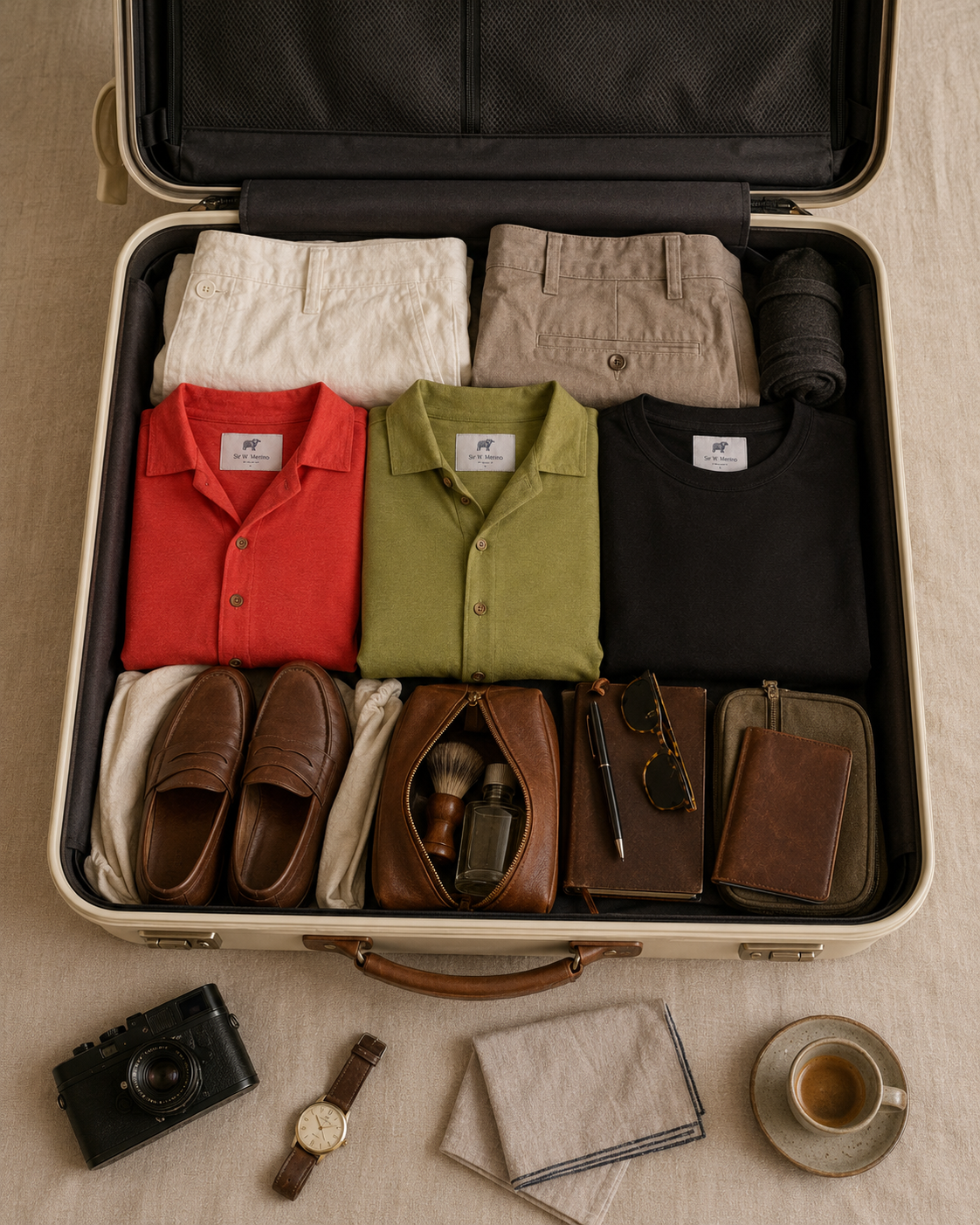
Or take the shortcut: The Starter Set ($290, $35 off) puts the core three in your hands at once — the foundation of a wardrobe you'll actually wear.
Frequently asked questions
Can you really wear the same merino shirt across a whole day — office to dinner?
Yes, and that's the point of the fibre. Superfine merino regulates temperature and handles moisture as vapour, so it stays comfortable as your surroundings change, and it resists odour and creasing better than cotton — so a shirt that looked considered at 9am still does at 9pm.
How many shirts do I actually need?
Fewer than you think. Most men wear a small fraction of what they own. Three well-chosen, hard-wearing shirts will cover far more occasions than a drawer full of compromises — which is exactly why we built The Starter Set around three.
Is merino too warm for summer?
No. Fine merino is a warm-weather fabric as much as a cold one — it pulls heat and moisture away from the skin and breathes, which is why it suits a Texas June. The Bruce, our short-sleeve button-up, was made with exactly that in mind.
Doesn't wool need constant dry-cleaning?
Superfine merino is lower-maintenance than most cotton. Because it resists odour at the fibre level, it needs washing far less often — usually a gentle cold wash and a flat dry. Less laundry is part of the appeal.
What's the difference between The George and The Bruce?
The George is a superfine merino polo — a collar that reads smart at a desk and under a jacket. The Bruce is a short-sleeve merino button-up — the same fabric in a more open, warm-weather cut. Many men own both and rotate them through the week.
Jock Merriman is the founder of Sir W. Merino and a fifth-generation Australian wool farmer. His family has been growing Merino wool since 1880, at Merryville Stud — founded by his great-grandfather Sir Walter Merriman in 1903 — in Boorowa, NSW. Jock lives in Austin, Texas, where Sir W. Merino is based.