Every summer I get some version of the same question, usually from a bloke sweating through a cotton t-shirt on Congress Avenue: "Mate, you're wearing wool. In Austin. In August. Are you all right?"
Fair question. But the people who've actually worked out how to dress for real heat have been wearing wool for a very long time, and it wasn't by accident.
Bedouin and Tuareg herders have crossed the Sahara and the Arabian desert in heavy, dark wool robes for centuries, in conditions that make an Austin summer look mild. If wool trapped heat the way most people assume, that clothing choice would have died out generations ago. It didn't, because it works — and the reason it works is worth explaining plainly, because it's the same reason a Merino shirt sits differently on you than a cotton one does on a 100-degree day.
It's not insulation in the way you think
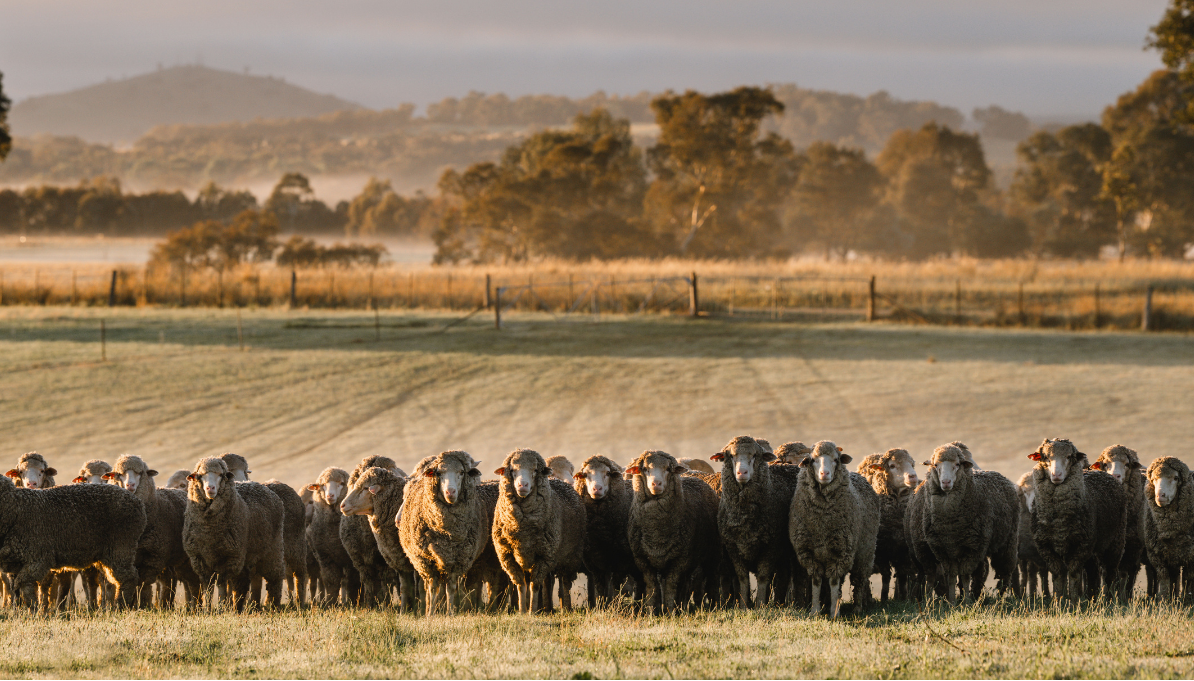
Insulation gets framed as one job: keep heat in. Wool actually does something closer to regulation — it slows heat transfer in both directions. The Merino fibre grows in a tight natural crimp, meaning a single strand is wavy rather than straight. Pack thousands of those wavy fibres into a knit or a weave and you get a fabric full of tiny, still air pockets. Still air is a poor conductor of heat, so it slows heat moving in from outside just as effectively as it slows heat escaping from inside. That's why the same fibre keeps a sheep warm on a frosty Boorowa morning and comfortable in paddock heat by afternoon. It isn't fighting the temperature. It's buffering it.
The part that actually matters for sweat
Here's the bit most people miss: wool is hygroscopic. That's a dry word for a genuinely useful trick — the fibre can absorb close to a third of its own weight in moisture vapour before it ever feels wet against your skin. Cotton, by comparison, soaks up liquid sweat and holds onto it, which is why a cotton shirt goes from dry to clammy to soaked with nothing much in between. Polyester barely absorbs moisture at all — it just lets sweat sit on the surface of your skin until it evaporates on its own, which is also why it hangs onto odour the way natural fibres don't.
Merino pulls moisture vapour away from your skin before it ever becomes a bead of sweat, moves it through the fibre, and releases it into the air. You stay drier for longer, and when you do sweat properly, the fabric isn't already saturated and useless.
And then there's the smell
This is the one people notice fastest. Wool fibre has a naturally resistant surface structure — the same properties that make it hygroscopic also make it a poor environment for the bacteria that cause body odour to take hold. Cotton and synthetics don't have that going for them. That's the actual, unglamorous reason I could wear the same two shirts for fourteen days through Italy and Ireland this July without a single wash and not offend anyone at a wedding. Not marketing. Fibre chemistry. (I wrote the whole trip up here, if you missed it.)
Why this beats "cooling" fabric claims
A lot of performance fabric marketing talks about "cooling" technology, which usually means a synthetic weave engineered to feel cold to the touch for the first ten minutes you wear it. That's a texture trick, not a fibre property, and it wears off by lunchtime. Merino isn't doing a trick. It's regulating — buffering temperature swings, managing moisture before it becomes a problem, and staying inert against the bacteria that make synthetic gear smell by evening. That's the difference between a fabric engineered to feel cool in a fitting room and a fibre that's already been keeping people comfortable in genuinely hostile heat for thousands of years.
I wear The Bruce through Austin summers for exactly this reason — not because wool is fashionable in July, but because it's the fibre that already solved the problem, long before anyone thought to print "cooling" on a hangtag. The Cassius does the same job in a lighter, athletic-cut tee, if a full button-up isn't what you're after.
If you want the deeper version of all this — crimp, micron count, the lot — I put it together properly in the Merino Field Guide.
— Jock Merriman, Founder · 5th generation