How Merino Wool Is Grown: From Australian Pastures to Your Wardrobe
A 5th-generation Australian wool farmer's guide to where your shirt actually comes from.
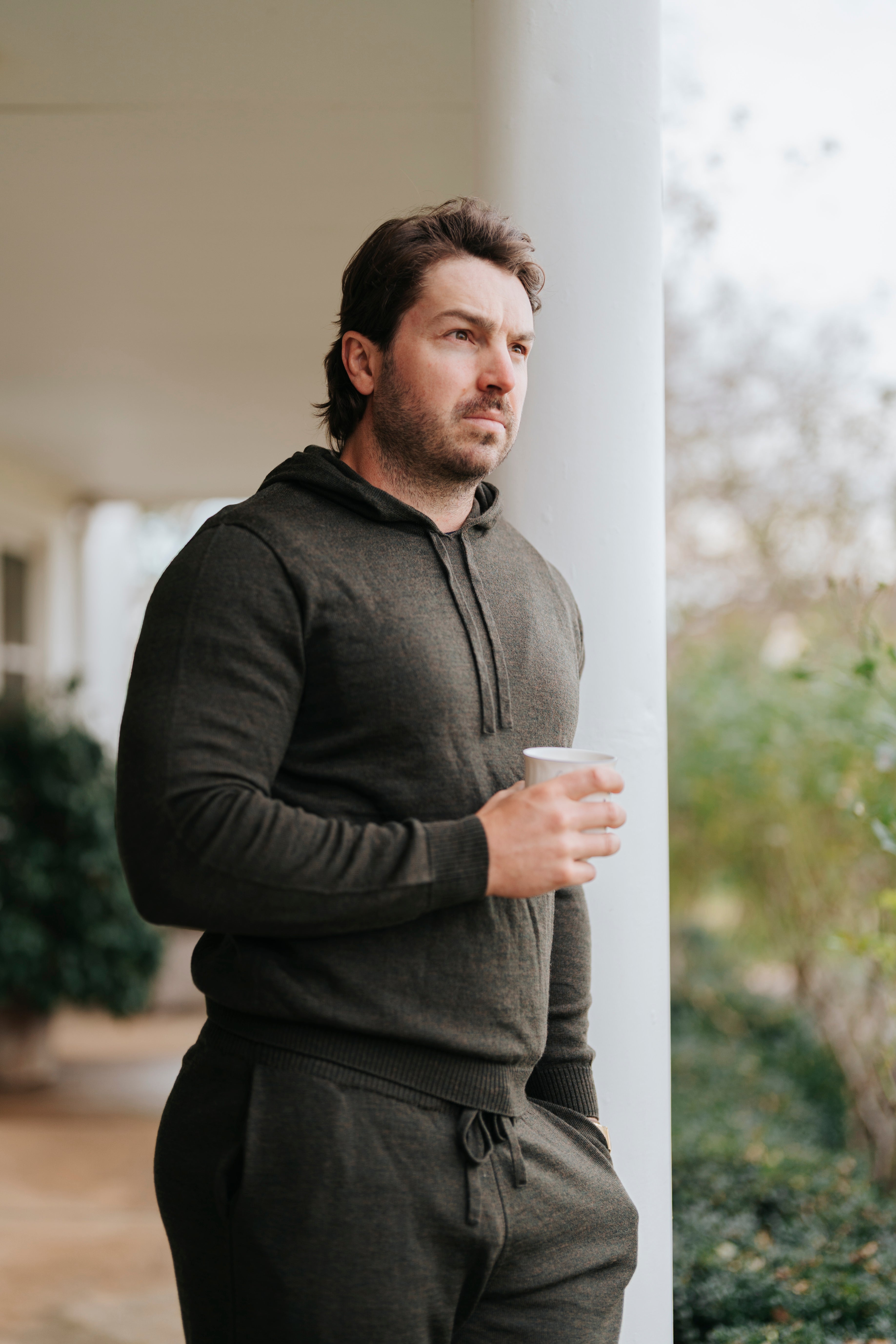
By Jock Merriman, Founder of Sir W. Merino
I grew up around Merino wool. My family has been growing it since 1880, when my great-great-great-grandfather George Merriman started at Ravensworth — a property near Murrumbateman, in the Southern Tablelands of New South Wales. In 1903, his son Walter received his first Merino flock as a 21st birthday gift and started his own operation just down the road. He called it Merryville Stud.
Walter spent fifty years building Merryville into one of Australia's most respected Merino studs. In 1954, Queen Elizabeth II knighted him for his contribution to the Australian Merino industry. Sir Walter Merriman is who the brand is named after.
Merryville Stud is still operating today, in Boorowa, NSW. My family still runs it. It's the world I built Sir W. Merino out of.
I'm telling you this because most articles about how Merino wool is grown are written by people who haven't watched it being grown. I grew up watching it. Working in the yards with my father, classing and drafting ewes through stinking hot summers, then back in the same yards on frosty winter mornings. Same sheep. Same fleeces. Same fibre, doing two opposite jobs across the year.
This is how it works — written from the inside.
What Is Merino Wool?
Merino is a specific breed of sheep, originally from Spain, that produces wool finer than any other variety in the world. Where regular sheep wool measures 30 microns or more (coarse, scratchy, suitable for carpets and outerwear), modern fine Merino measures between 16 and 19 microns — softer than most cotton, with none of the itch people associate with wool.
The fibre's fineness is what makes the difference. At 17 microns, a Merino fibre is too fine to trigger the nerve endings that cause the "itchy wool" sensation. It drapes like cotton, regulates temperature like nothing else, and resists odour in a way no synthetic can match.
But fineness is only half the story. The other half is how the sheep are raised.
Why Australia Produces the World's Best Merino
Australia produces around 80% of the world's apparel-grade wool. There's a reason.
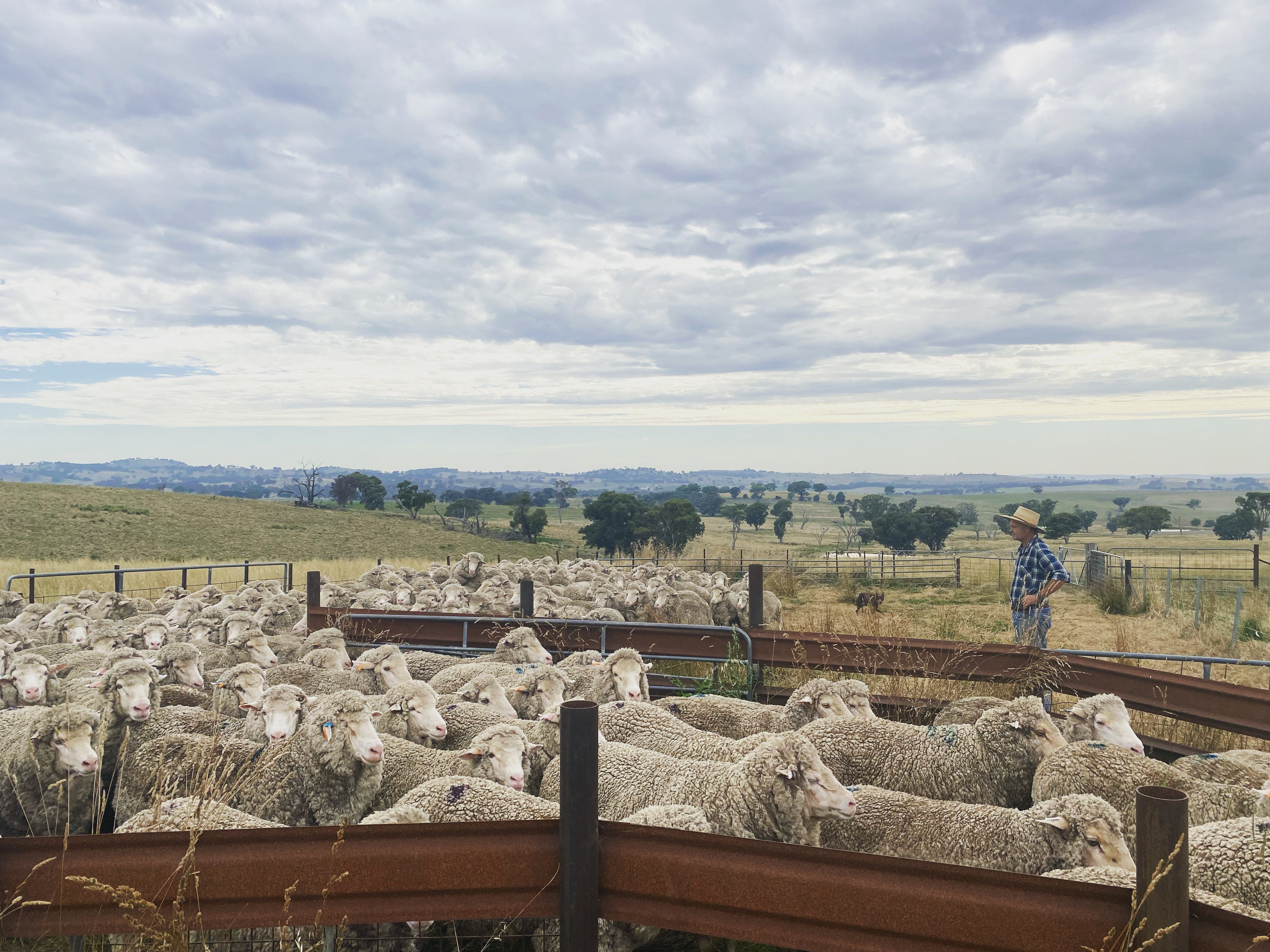
Merino sheep need specific conditions to produce fine, consistent fleeces year after year: dry climate, abundant pasture, careful breeding, and skilled husbandry. Australia's southeastern regions — particularly the Riverina, the Central Tablelands, and the New England plateau — have exactly that combination. Cool winters, warm summers, native grasses, and 200 years of accumulated knowledge in how to breed for fine wool.
Our family started at Ravensworth, near Murrumbateman, in the Southern Tablelands — one of the historically most important fine wool regions in the country. Sir Walter built Merryville Stud just down the road. By the 1970s, the family had moved Merryville to Boorowa, NSW, where it remains today. Same family, three properties over 145 years, one fibre.
The Annual Cycle: A Year in the Life of a Merino Sheep
Wool isn't grown in a factory. It's grown over time, on the back of an animal, through a cycle that hasn't changed much in 200 years.
Spring (September–November in Australia)
Lambing season. Ewes give birth in the paddock, usually one lamb each, sometimes twins. The new lambs are vulnerable to cold and predators, so this is one of the most labour-intensive times of year. Farmers check the flock multiple times a day. The lambs that survive their first month will likely live for 5–7 years and produce wool every year.
Summer (December–February)
This is shearing season on most properties — though timing varies by region. The fleece is at its longest after a year of growth, and the warm weather means the sheep handle being shorn without getting cold. A skilled shearer can remove an entire fleece in under three minutes, in one continuous piece, without nicking the skin.
I grew up working in the yards during summer — drafting ewes, classing fleeces, learning what makes one fleece more valuable than another. It's one of the most intense weeks of the farming year. Stinking hot, dust everywhere, long days. But the sheep walk out the other end looking light and clean, ready for the next year of growth.
Autumn (March–May)
The shorn sheep regrow fleece quickly — about 1cm per month — and farmers focus on pasture management, parasite control, and preparing for joining (mating season). Rams are selected carefully; the right ram can improve the fineness and consistency of the flock's wool for generations.
Winter (June–August)
Cold mornings, sometimes frost. The sheep have grown about 6cm of wool by now and are completely insulated. Same wool that kept them cool through summer is now the only thing between them and the frost.
This is the moment my father used to point at and say: "Same wool. Same animal. Tell me why anyone makes shirts out of anything else."
From Fleece to Fabric: The Process After the Sheep
Once the wool is off the sheep, the journey to a finished shirt is long.
1. Classing
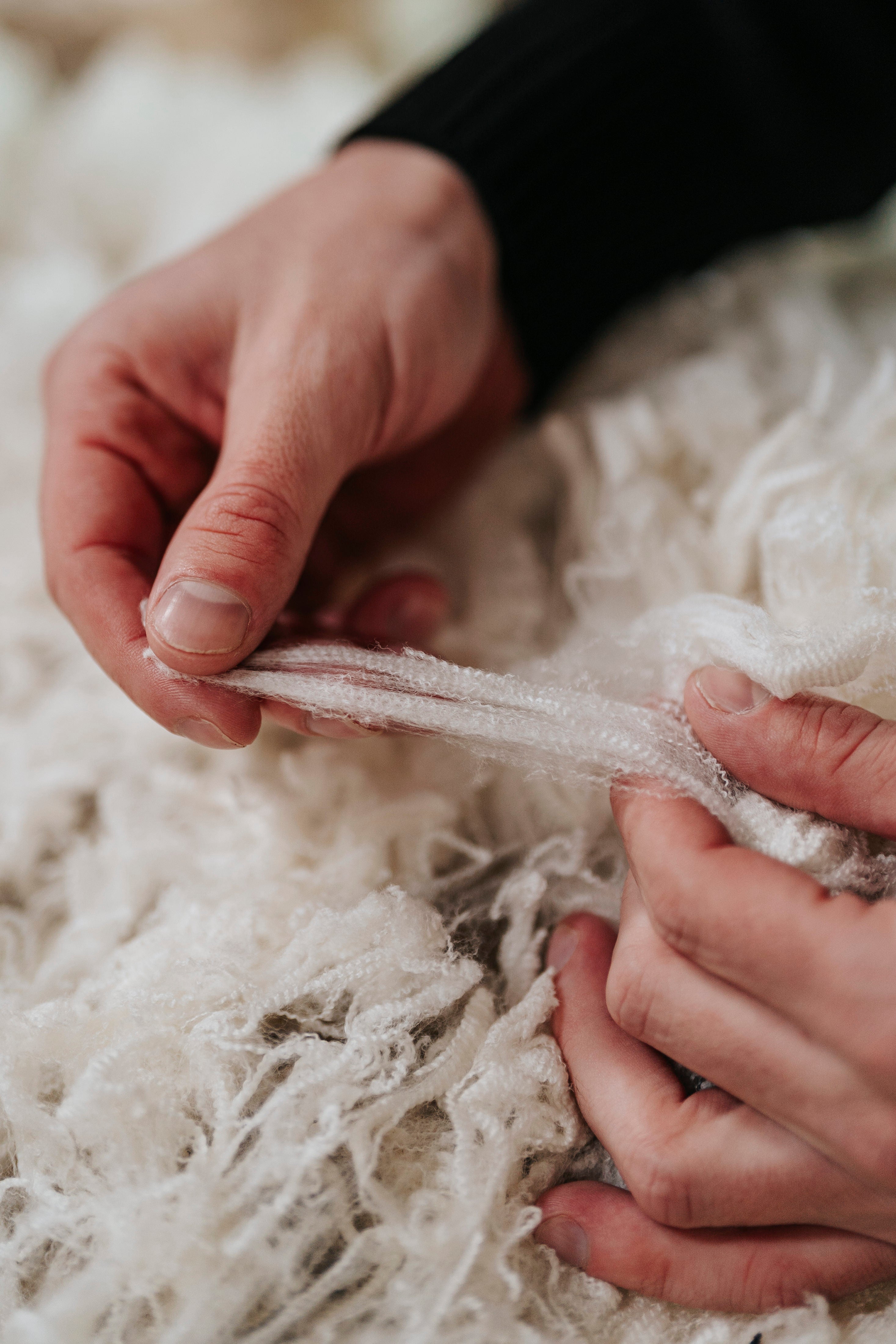
In the shearing shed, every fleece is inspected by a wool classer — a trained specialist who assesses fibre diameter, length, strength, and colour. Fleeces are sorted into different grades. The finest fleeces (16–19 micron) are destined for apparel; coarser fleeces go to carpets, upholstery, or industrial uses.
2. Scouring
The wool is washed to remove lanolin (the natural waxy oil from the sheep's skin), dirt, and any vegetable matter. This is done in large-scale wool scouring facilities, typically using warm water and biodegradable detergents. The lanolin is recovered and sold separately — it's used in skincare products and lubricants.
3. Combing and Carding
The clean wool is combed to align the fibres and remove any short or broken pieces. The result is a long, continuous "top" — a ribbon of aligned fibres ready for spinning.
4. Spinning
The top is spun into yarn. The thickness of the yarn, the twist, and the ply all affect how the finished fabric will look and feel. Italian and Japanese spinners are widely regarded as the world's best for fine Merino yarn — they're who we use for our shirts.
5. Knitting or Weaving
The yarn is knitted (for jersey fabrics like t-shirts and polos) or woven (for shirting fabrics like button-ups). At Sir W., we use both — knitted Merino for The Cassius and The George, woven Merino for The Bruce.
6. Cutting and Sewing
The finished fabric is cut to pattern and sewn into shirts. This is where most of the cost of a Merino garment goes — into the precision of the cut and the quality of the construction. Cheap Merino exists, but it's almost always let down by sloppy construction. Good Merino shirts are made slowly, by people who care about the small details.
Why Merino Wool Works the Way It Does
The properties that make Merino remarkable as a fabric are direct consequences of how the sheep evolved to wear it.
Temperature regulation. The fibre's natural crimp creates tiny air pockets that trap warmth in cold weather. In hot weather, the same crimp wicks moisture away from the skin, allowing it to evaporate and cool the body. Sheep don't switch fleeces seasonally. The same wool does both jobs. (Read more about how merino manages temperature →)
Moisture management. Merino can absorb up to 30% of its weight in moisture without feeling wet. The fibre's outer cuticle repels liquid water (so it doesn't soak you in rain), but the inner cortex absorbs water vapour (your sweat) and releases it slowly into the air. This is why Merino feels dry even when you're working hard.
Odour resistance. The structure of Merino fibre, combined with trace lanolin content even after scouring, makes the fabric naturally antimicrobial. Bacteria — which cause body odour — struggle to colonise wool the way they do cotton or polyester. You can wear a Merino shirt for three or four days between washes and it still smells fresh.
Biodegradability. Merino is 100% biodegradable. A wool shirt buried in soil will fully decompose within a year. A polyester shirt? Hundreds of years, and it'll shed microplastics the whole time. (See the full breakdown: merino vs polyester →)
What Makes Sir W. Different
There are dozens of Merino brands now. Some are excellent. Some are not. Here's what we do differently:
Family heritage. My family's stud — Merryville, founded by my great-grandfather Sir Walter Merriman in 1903 — is still operating in Boorowa, NSW today. Five generations of my family have worked with this fibre. I grew up around it. When I started Sir W., the question wasn't 'will the wool work?' — it was 'why isn't everyone already wearing this?"
A small range, made properly. We sell three shirts — The Bruce (button-up), The George (polo), and The Cassius (athletic tee). That's it. Each one is made with the right weight, the right fibre, the right construction. We don't release seasonal collections. We don't run sales. We just make the same shirts well, year after year.
Honest pricing. A $125 Merino shirt sounds expensive next to a $30 cotton one. But it lasts 4-7 years instead of 18 months, holds shape, doesn't smell, and replaces multiple shirts in your wardrobe. Cost per wear, Merino wins easily. (See the full cost-per-wear math →)
Where to Start
If you've never owned a Merino shirt, The Starter Set is the easiest way in — all three of our shirts, $35 less than buying them individually.
If you want to begin with one, The Bruce is the shirt most people fall for first. Lightweight 18.5 micron Merino, drapes like a dress shirt, breathes like a t-shirt, travels like a packable jacket.
Whichever you pick, you're wearing a fibre that's been doing exactly this job — keeping a body comfortable across a full year of climate — for as long as humans have raised sheep. Five generations of my family have worked with it. I'd be surprised if you didn't end up wearing it for the next five.
Frequently Asked Questions
How long does it take to grow a Merino fleece?
A Merino sheep grows a full fleece in about 12 months, producing roughly 5–7 kilograms of wool per year. Sheep are shorn once annually, usually in summer, after which the wool begins growing back immediately at around 1cm per month.
Is Merino wool sustainable?
Yes. Merino is a renewable, biodegradable natural fibre. Sheep produce a new fleece every year, the land used for grazing supports biodiversity, and the wool itself fully decomposes when discarded. Compared to petroleum-based synthetics like polyester, Merino has a dramatically lower environmental footprint.
Where does most Merino wool come from?
Australia produces roughly 80% of the world's apparel-grade Merino wool. The country's southeastern regions — particularly the Central Tablelands and Riverina — have the ideal climate and pasture for fine Merino production.
Why is Australian Merino considered the best?
Australian Merino combines centuries of selective breeding with optimal climate conditions. Australian Merino sheep produce some of the finest wool in the world (16–19 microns on average), with consistent quality, length, and strength that make it ideal for premium apparel.
How is Merino wool different from regular wool?
Merino comes from a specific breed of sheep that produces fibres 16–19 microns thick — about half the diameter of regular wool. This makes Merino soft against the skin (no itch), drape well as fabric, and regulate temperature far more effectively than coarser wools.
Where is Sir W. Merino made? Our shirts are made from premium Australian Merino wool — the same fibre tradition my family has been part of since 1880. Designed in Austin, Texas, and manufactured in Shanghai by Diyang, a factory that specializes in fine merino apparel for premium brands. My family's stud, Merryville, was founded by Sir Walter Merriman in 1903 and is still operating in Boorowa, NSW today.
Jock Merriman is the founder of Sir W. Merino and a fifth-generation Australian wool farmer. His family has been growing Merino wool since 1880, and currently operates Merryville Stud — founded by Sir Walter Merriman in 1903 — in Boorowa, NSW. Jock lives in Austin, Texas, where Sir W. Merino is based.