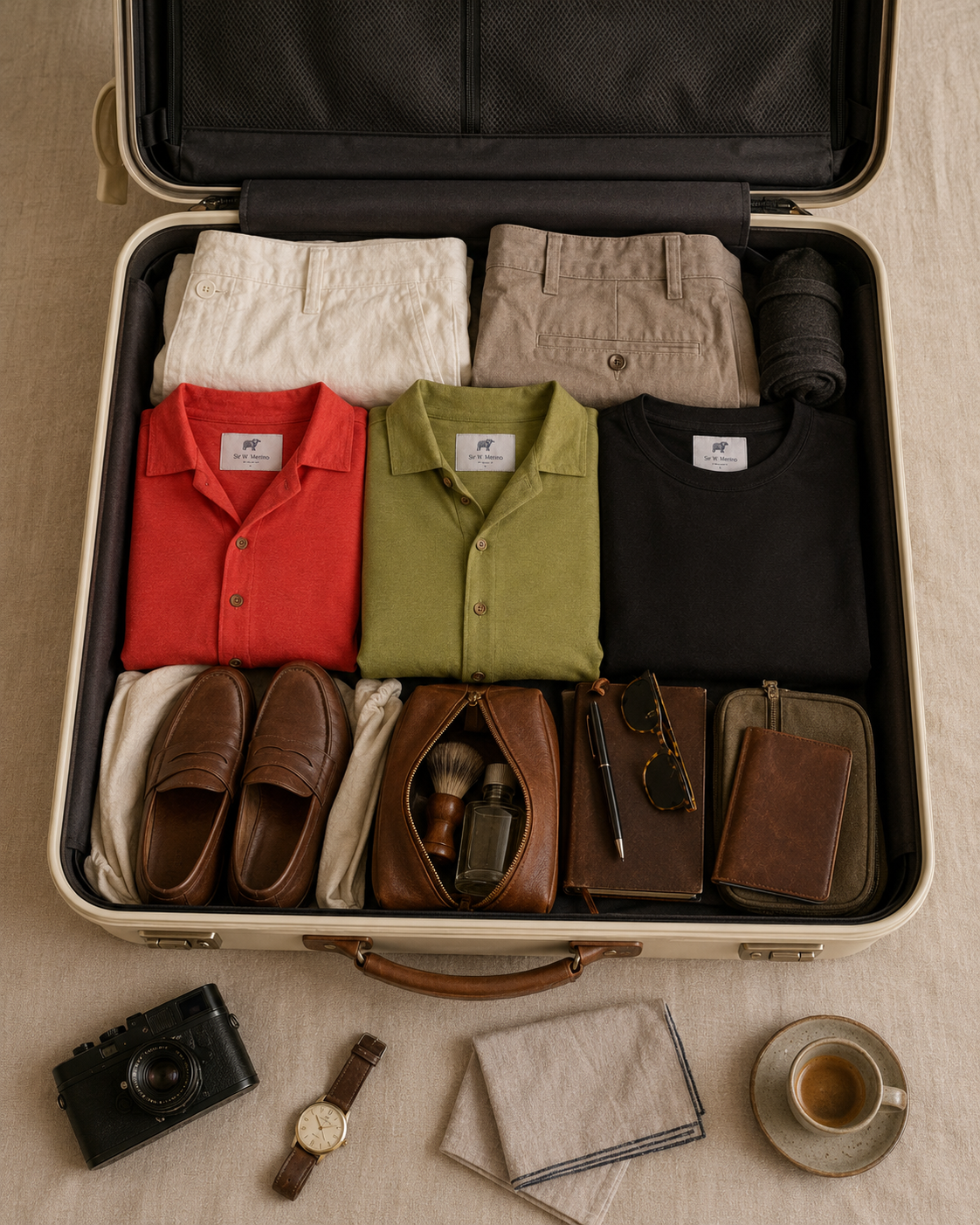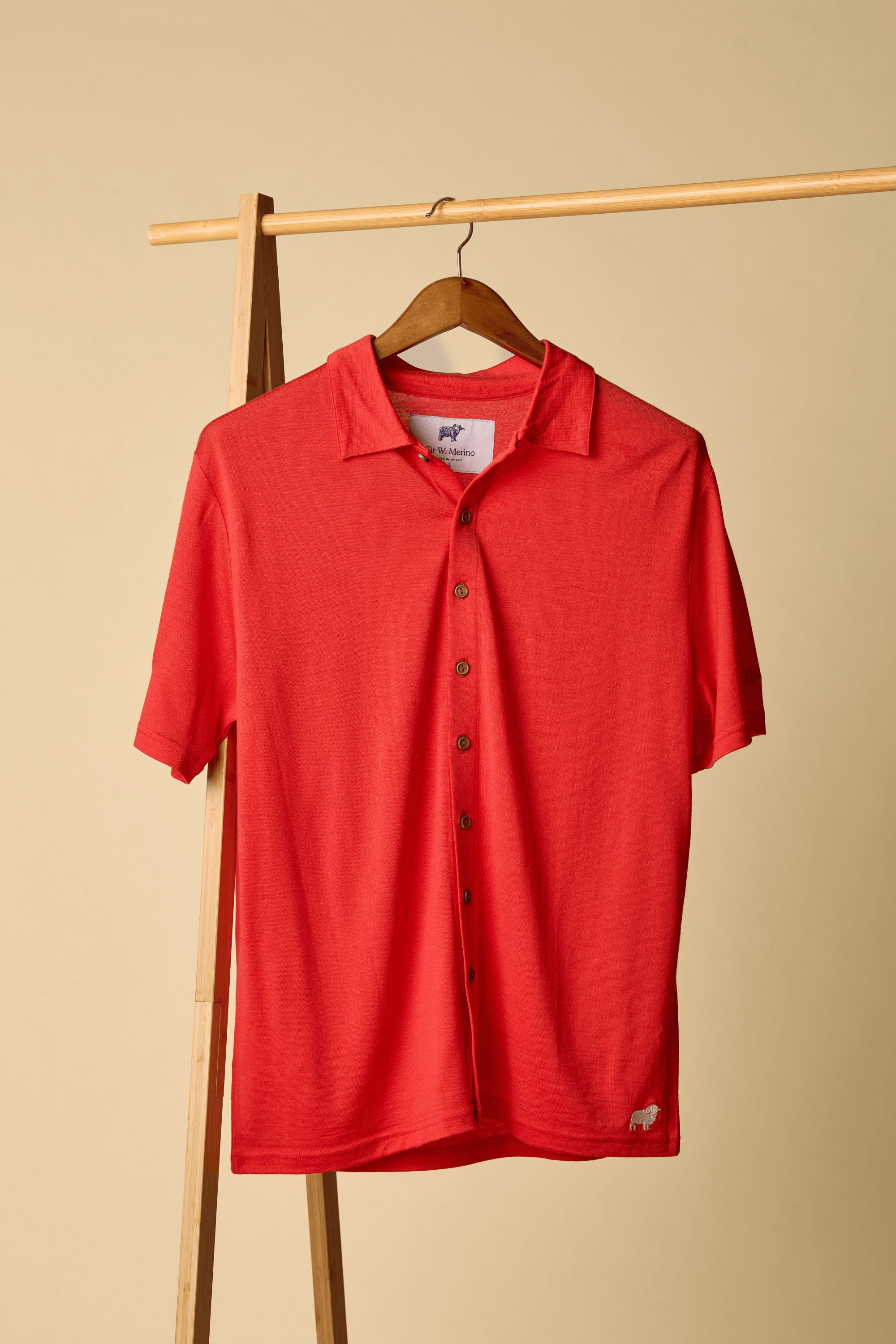
Every shirt sheds in the machine — merino included. The difference is what it sheds, and what happens to it next.
Here's a fact that reframes your laundry basket: every time you run a wash, your clothes shed. Tiny fragments of fibre work loose in the drum, rinse out with the water, and head off down the drain. Cotton does it. Wool does it. Polyester does it. Shedding is not the interesting part.
The interesting part is what those fragments are made of — because that decides whether they're gone in a season or still drifting about when your grandchildren do their washing.
Most performance shirts are plastic
Polyester is PET — polyethylene terephthalate, the same polymer as a fizzy-drink bottle, melted and drawn into thread fine enough to knit. It's cheap, light and quick-drying, which is why it now accounts for more than half of all fibre produced worldwide, and why nearly every "technical" shirt on the rack is made of it.
None of that is a scandal on its own. The trouble is what plastic does in a washing machine, and what it refuses to do afterwards.
The wash cycle problem
Every wash abrades fabric. With synthetics, the fragments that come off are microplastics — fibres a fraction of a millimetre long, and a single load of synthetic clothing can release hundreds of thousands of them. Wastewater plants catch a good share, but not all, and the remainder flows on into rivers and the sea. The IUCN has estimated that washing synthetic textiles is the largest single source of primary microplastics in the ocean — roughly a third of the total.
Once there, polyester fragments don't break down in any timescale that matters to a human. Estimates run from decades to considerably longer; nobody has been around long enough to watch one finish.
Merino sheds too — and then it disappears
Now the honest bit, because we don't sell fairy tales here: a merino shirt sheds fibres in the machine as well. Everything does. But wool is keratin — the same family of protein as the hair on your head — and keratin is food, not litter. In soil or seawater, wool fibres biodegrade in a matter of months, returning their nitrogen and carbon to the system they came from. A wool fibre is borrowed. A polyester fibre is permanent.
Merino also gives you a second lever most people miss: it needs washing far less often in the first place. The fibre's structure resists odour — that's the keratin and the way it handles moisture, not lanolin, which is scoured out long before spinning — so a shirt worn Monday can usually be aired overnight and worn again. Fewer washes means fewer fibres shed, less energy burned, and a shirt that lasts longer for it.
REPLACE THE PLASTIC TEE — SHOP THE CASSIUS →
What happens at the end
Wardrobes end. When a polyester shirt finally gives out, it goes to landfill and stays there — intact for decades at a minimum, shedding fragments as it slowly falls apart. When a wool shirt gives out, the ground takes it back in about a year.
And to keep ourselves honest twice over: wool is not zero-impact. Sheep need land and water, and growing fibre has a footprint like growing anything. The claim here is narrower and truer — a merino shirt doesn't leave plastic behind, in the wash or in the ground. In 2026, that's a rarer property than it should be.
One more honest note: this is not an argument for binning the polyester you already own. The most wasteful shirt is the one replaced before its time. Wear yours out. Just choose differently when it's done.
The bottom line
Every shirt sheds in the wash. Polyester sheds plastic that outlasts you; merino sheds protein that's gone by next season — and it needs fewer washes to begin with. If you're going to put a fibre down the drain a few thousand strands at a time, make it one the ocean knows what to do with.
THREE SHIRTS, NO PLASTIC — THE STARTER SET ($35 OFF) →
FAQ
Is polyester really plastic?
Yes. Polyester fabric is PET — the same polymer used in drink bottles — melted and extruded into fine thread. It's plastic in every chemical sense, and it behaves like plastic in the environment.
Do merino shirts shed microfibres in the wash?
They do — all fabric sheds when washed. The difference is that merino fibres are keratin protein and biodegrade in soil or seawater in a matter of months, while polyester fragments persist for decades or more.
How long does wool take to biodegrade compared with polyester?
Buried in soil or lost at sea, wool fibres break down in months, returning nutrients as they go. Polyester's estimates start at decades; in practice, no one has observed a full lifecycle.
Does merino need washing as often as polyester?
No — and this is half the sustainability case. Merino's fibre structure resists odour, so a shirt can typically be aired and re-worn several times between washes. Fewer washes means fewer shed fibres, less energy and a longer-lived garment.
Should I throw out my polyester gym shirts?
No. Replacing a garment before it's worn out wastes more than it saves. Wear what you own until it's done — then replace it with something that won't outlive the landfill it's buried in.