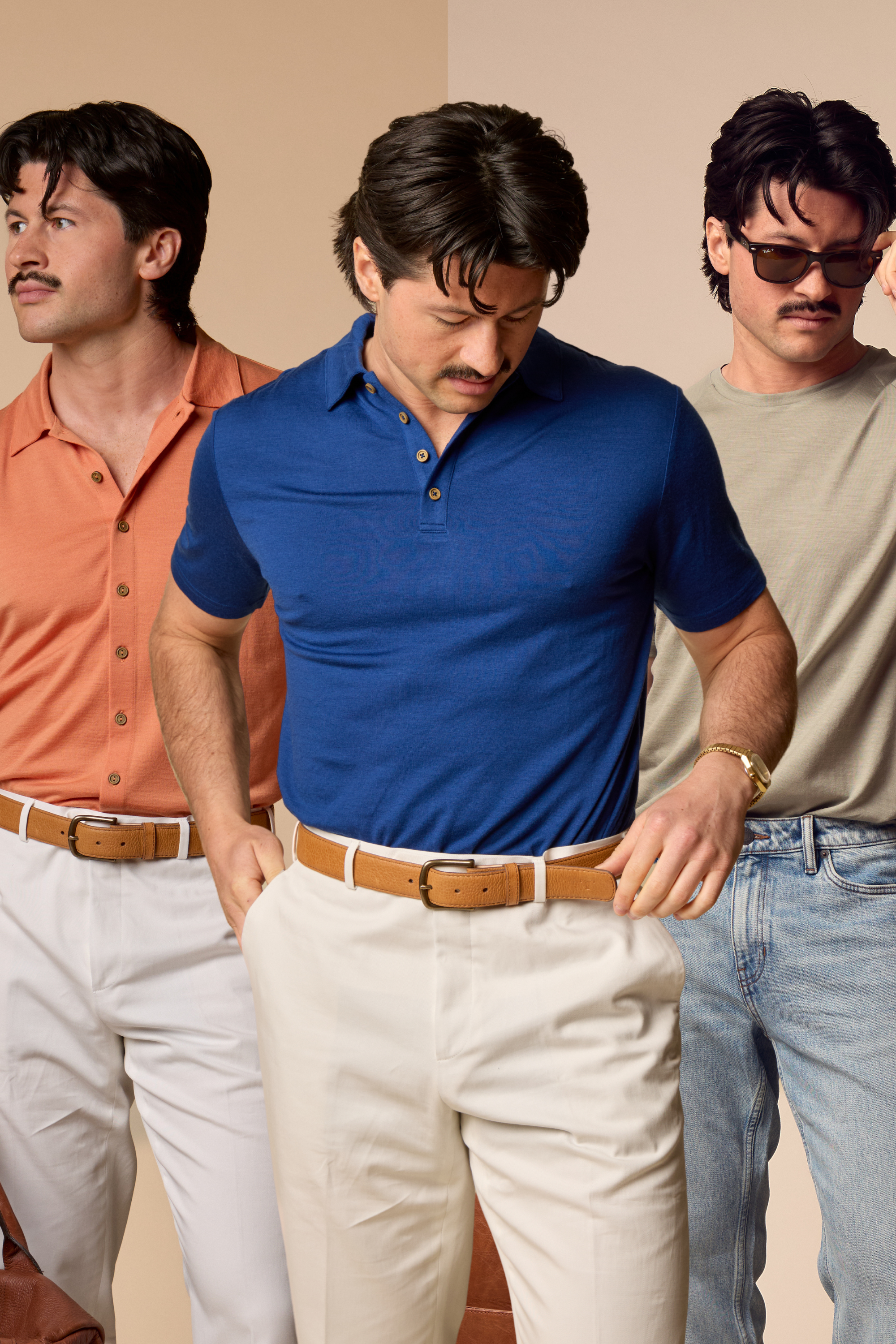
The Seven-Shirt Wardrobe: Why Owning Less Looks Better
Most men own somewhere north of twenty shirts and wear the same five on rotation. The other fifteen aren't a wardrobe — they're a museum of past decisions. Here's the case for owning seven shirts that all earn their hanger.
By Jock Merriman, Founder of Sir W. Merino
The twenty-five problem
Open your wardrobe and count the shirts. Now count the ones you've worn in the last month. For most men the first number is twenty-something and the second is five. The gap between those numbers is money spent on clothes that don't get worn — and, worse, a daily decision made harder by clutter that was never going to be picked.
The best-dressed men I know don't own more clothes than average. They own fewer, and everything they own works. That's not an accident of taste. It's a system, and the system is buildable.
The wardrobe math
Cost-per-wear is the only clothing number that matters: price divided by the number of times you actually wear the thing. A $30 shirt worn ten times before it fades, pills or gets quietly retired costs $3.00 a wear. A $125 shirt worn a hundred times costs $1.25. The expensive shirt is the cheap one — provided it's good enough to reach a hundred wears.
What drives the denominator isn't how much you like a shirt. It's two things: how many settings the shirt works in, and how well it survives being worn often. A shirt that's right for the office, dinner and the weekend gets worn three times as often as one that only suits a single setting. And a fabric that doesn't need washing after every wear both lasts longer and is available more often — it's hanging in your wardrobe rather than sitting in the laundry basket.
The three-settings test
Before any shirt earns a place, apply one test: does it work in at least three settings without apology? Not survive — work.
A fine merino polo passes easily. It reads polished enough for the morning meeting, relaxed enough for the school pickup, and considered enough for dinner at the place with the wine list. A short-sleeve merino button-up does the same job one notch dressier — smart casual solved, even in a Texas July. A well-cut merino tee covers the gym, the errand run and the flight.
Cotton, for the record, is a fine fibre too — around 15 to 20 microns, similar territory to superfine merino. The difference isn't fineness. It's behaviour. Superfine merino (ours is 17.5–19 microns) regulates temperature when the car park is 38 degrees and the restaurant is 19, moves moisture before it becomes visible, and resists odour because of the fibre's structure and keratin chemistry — which is why it's still presentable at 8pm on the day it started at 7am.
Building the seven
The shape of a seven-shirt wardrobe, for a warm-climate life:
Two polos — the daily workhorses, one dark, one light. Two short-sleeve button-ups — for rooms with a dress code, and dinners you didn't plan. Two athletic tees — training, travel, weekends. One wildcard — the shirt that's yours: the colour or pattern you actually love, chosen deliberately rather than accumulated.
Seven shirts, each passing the three-settings test, covers a fortnight of real life without repetition anyone would notice — and without a single shirt you reach past.
The bottom line
Owning less isn't a sacrifice; it's an upgrade. Fewer, better shirts mean better mornings, better cost-per-wear and — because everything in the wardrobe was chosen to work — a better-dressed man. Buy fewer. Buy better. Wear them to death.
The George — the superfine merino polo, $110 →
The Starter Set — all three shirts, $290 ($35 off) →
FAQ
How many shirts does a man actually need?
Seven well-chosen shirts cover a fortnight of real life for most men: two polos, two short-sleeve button-ups, two tees and one wildcard. The number matters less than the rule — every shirt should work in at least three settings.
Isn't a $125 shirt expensive?
Per wear, no. A $125 shirt worn a hundred times costs $1.25 a wear; a $30 shirt worn ten times costs $3.00. Quality shifts the arithmetic by surviving more wears and earning more of them.
Why merino rather than cotton for a small wardrobe?
Cotton is a fine, comfortable fibre — the difference is behaviour, not fineness. Merino regulates temperature, manages moisture and resists odour through the fibre's structure, so one shirt covers more settings and needs fewer washes. In a small wardrobe, every shirt has to work harder.
How often should merino shirts be washed?
Far less often than cotton. Air a merino shirt overnight and it's usually ready to go again; several wears between washes is normal. Fewer washes also means a longer garment life.
Is superfine merino itchy?
No. The itch of old-fashioned wool comes from coarse fibres above roughly 30 microns. Superfine merino at 17.5–19 microns sits well below that threshold and feels soft against bare skin.
Jock Merriman is a fifth-generation Australian wool farmer and the founder of Sir W. Merino. His family has been growing Merino wool since 1880 and still runs Merryville Stud — founded by his great-grandfather Sir Walter Merriman in 1903 — in Boorowa, NSW. Jock lives in Austin, Texas, where he tests every shirt in the punishing heat it was made for.